If you’ve heard about duct cleaning but aren’t sure if it’s worth it, you’re not alone. Many homeowners wonder if it’s necessary to clean your air ducts, and the short answer is that it depends.
Air duct cleaning means removing dust and debris from parts of your HVAC system. These parts can include supply and return ducts, registers, grilles, diffusers, heat exchangers, coils, drip pans, fans, and the air handling unit housing. According to the EPA, when duct systems aren’t properly maintained, they can collect dust, pollen, and moisture, which can lead to mold growth. That’s a real concern in places like Baltimore, where many homes are older and summer humidity is high.
Indoor Air Quality Benefits of Clean Ducts
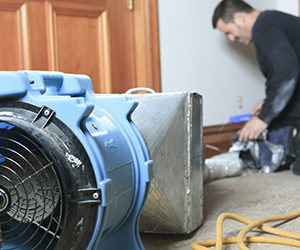 A major reason to clean your air ducts is to improve your indoor air quality. Dirty ducts can spread allergens like dust and debris, pet dander, mold spores, and pollen throughout your home. When those particles build up, they can trigger allergy and asthma symptoms, especially in homes with children, pets, or older adults.
The Maryland Department of Health warns that indoor pollutants, including mold and pests, are linked to serious health risks like asthma and respiratory illness. That’s why they recommend identifying and fixing indoor environmental hazards.
Medical experts at Harvard Medical School agree. They suggest that duct cleaning can help reduce indoor allergens and may be worth considering. This is especially true during our Maryland winters, when your home is sealed tight and fresh air is limited.
When Should Air Ducts Be Cleaned?
The EPA doesn’t recommend routine duct cleaning, but there are clear signs it’s time to act. You should consider cleaning your air ducts when you have:
- Visible mold growth
- You see visible mold in your ductwork or on heating and cooling system parts.
- This means there’s a moisture problem that must be fixed first.
- Evidence of vermin infestation
- There are signs of rodents or insects living in your ducts.
- This requires cleanup and sealing to prevent re-entry.
- Clogged ducts, dust discharge
- You notice dust and debris blowing out of your vents.
- Persistent odors
- There’s an unusual odor when your HVAC system runs.
- After major construction or renovation
- You’ve recently had construction work done.
- Drywall dust and sawdust can contaminate your duct systems if openings weren’t sealed.
- Newly installed ductwork
- They may contain oils, debris, or dirt from manufacturing or storage.
- Ductwork should be inspected before HVAC connection.
Duct cleaning should be done as needed, when specific issues arise and not on a set schedule. It’s important to conduct periodic visual inspections to spot issues early before they become big problems later.
HVAC Performance and Energy Efficiency
 Dirty ducts don’t just affect your health, they can impact your energy bills, too. Buildup inside ductwork restricts airflow, forcing your HVAC system to work harder. This puts more strain on your heating and cooling system and can lead to costly repairs.
Maintaining clean ducts and performing regular filter changes can improve your home’s indoor air quality and energy efficiency. When air flows freely, your system doesn’t need as much energy to heat or cool your home, and your indoor temps stay more even.
Keeping ducts clean can also extend the life of your HVAC equipment by preventing wear and tear caused by dust and debris.
Best Practices for Maryland Builders and Contractors
If you’re building or remodeling in Maryland, don’t overlook the importance of clean ductwork. Here’s what the experts recommend:
- Seal ducts during construction.
- Prevent drywall dust and debris from entering the system.
- Inspect and clean new ducts.
- Do this before connecting them to your HVAC unit.
- Address moisture issues right away.
- Maryland’s humid summers make mold prevention a must.
- Immediately repair any roof or plumbing leaks into the ducts.
- Ensure proper ductwork insulation in unconditioned spaces.
- Use high-quality filters
- Look for pleated ones with a decent MERV rating. A rating of 8-13 is suitable for most homes.
- Design duct layouts that allow easy access for cleaning.
- Educate homeowners on HVAC maintenance.
- Changing filters every 1–3 months.
- Booking annual HVAC service.
- Watching for signs of problems.
- Keeping vents unobstructed.
Trust DeVere Insulation Home Performance for Cleaner Air
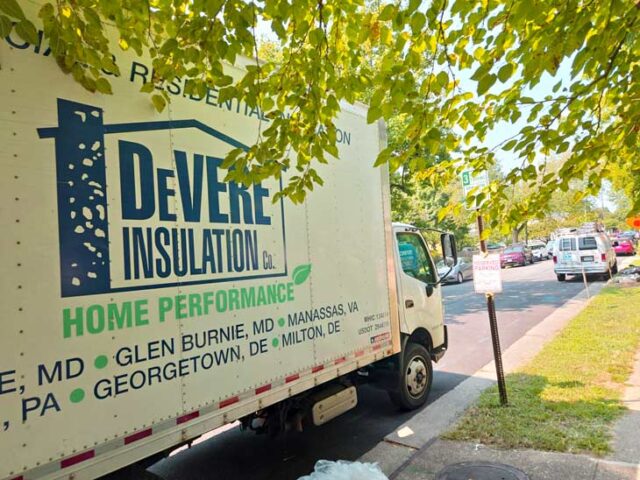
At DeVere Insulation Home Performance, we offer complete healthy home solutions for Baltimore area families. Our experts know how to assess your air, identify issues, and recommend smart, long-lasting fixes. Whether it’s dirty ducts, poor ventilation, or humidity issues, we’re here to help.
We offer:
- Whole-house air filtration and purification.
- Healthy home assessments with indoor air quality testing.
- Insulation, air sealing, and energy-saving upgrades.
Breathe easier. Trust the local team Maryland homeowners count on. Contact us today for a free estimate and find out how we can help you take control of your Baltimore area home’s air.
____________________________________________________________________________________
Resources
General Services Administration. (n.d.). Indoor environmental quality. GSA.gov. https://www.gsa.gov/governmentwide-initiatives/federal-highperformance-buildings/highperformance-building-clearinghouse/health/indoor-environmental-quality.
Harvard Health Publishing. (n.d.). Easy ways you can improve indoor air quality. Harvard Health. https://www.health.harvard.edu/staying-healthy/easy-ways-you-can-improve-indoor-air-quality.
Maryland Department of Health. (n.d.). Healthy homes. Health.maryland.gov. https://health.maryland.gov/phpa/OEHFP/EH/pages/healthy-homes.aspx.
National Institutes of Health, Office of Research Services. (n.d.). Fact sheet: HVAC duct cleaning [PDF]. https://ors.od.nih.gov/sr/dohs/Documents/fact-sheet-hvac-duct-cleaning.pdf.
U.S. Environmental Protection Agency. (n.d.). Should you have the air ducts in your home cleaned? EPA.gov. https://www.epa.gov/indoor-air-quality-iaq/should-you-have-air-ducts-your-home-cleaned.