Indoor Air Quality in Maryland Homes: The Hidden Risk
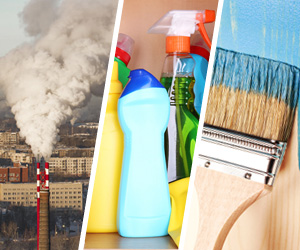 Americans spend about 90% of their time indoors, where concentrations of some pollutants are often two to five times higher than outdoor levels, according to the U.S. Environmental Protection Agency (EPA). Now add Maryland’s humid summers, aging housing stock, and wide seasonal temperature swings. Many homes across the state trap heat, moisture, and contaminants inside the building envelope. Indoor air pollutants come from a variety of sources, including building materials, household products, and uncontrolled air filtration. What you don’t know about your home’s air quality is this: the air you breathe inside may be more polluted than the air outside.
The good news is that improving indoor air quality in Maryland homes does not require guesswork. A proven three-part strategy works: air sealing, proper ventilation, and source control.
Not sure where your home stands? A Healthy Home Assessment can identify exactly what’s affecting your indoor air.
Where Indoor Air Pollutants Come From
Building Materials and Household Products
The primary cause of indoor air quality problems in homes is pollution from indoor sources. Many materials inside your home release gases or particles into the air over time.
Common contributors include:
- Pressed wood products and cabinetry
- Carpeting and adhesives
- Cleaning supplies and disinfectants
- Personal care products
- Paints and finishes that release volatile organic compounds (VOCs)
These indoor air pollutants can accumulate, especially in tightly enclosed spaces without adequate ventilation.
Uncontrolled Air Infiltration
Air leaks around windows, doors, attic penetrations, ductwork, and foundation gaps allow unfiltered outdoor air to enter your home. This air infiltration brings in pollen, dust, vehicle exhaust, and moisture.
At the same time, inadequate ventilation can increase indoor pollutant levels by failing to bring in enough outdoor air to dilute indoor sources and to carry indoor pollutants out. When high temperatures and humidity, often seen during Maryland summers, combine with poor airflow, pollutant levels can rise quickly.
Health Effects
 Short-term exposure to poor indoor air quality can cause headaches, fatigue, and irritation of the eyes, nose, and throat. Long-term exposure has been linked to respiratory disease, heart disease, and even cancer. Children, older adults, and those with asthma or cardiovascular conditions are especially vulnerable. Maryland homeowners should also be aware that high humidity levels, particularly in summer, can intensify chemical emissions and contribute to mold and moisture problems. The Maryland Department of Health identifies mold, radon, allergens, carbon monoxide, and tobacco smoke as the top environmental health concerns inside homes.
Air Sealing: Creating a Controlled Indoor Environment
The first step in improving indoor air quality is stopping uncontrolled air leaks.
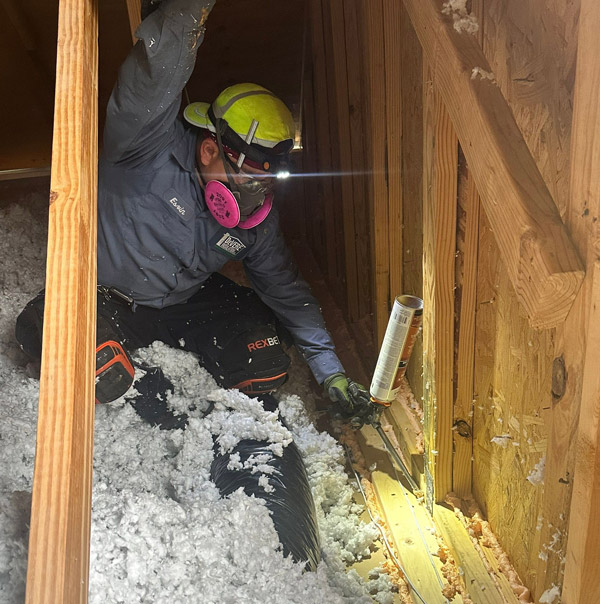 Air sealing closes gaps in the building envelope, preventing unwanted air infiltration. Common leak points include:
- Recessed lighting and attic access points
- Plumbing and electrical penetrations
- Duct seams and connections
- Sill plates and rim joists
- Window and door frames
Sealing these areas creates a controlled indoor environment. Instead of random air entering wherever it can, you decide how and where fresh air comes in.
Air sealing also improves home energy efficiency. By reducing drafts and heat loss, your HVAC system works less to maintain comfort. Just as important, tight construction prevents moisture from traveling into walls and attic spaces, where it can condense and cause mold and structural damage. The EPA notes that well-sealed, energy-efficient homes with mechanical ventilation can actually have better indoor air quality than drafty homes because airflow is intentional and controlled.
In many Maryland homes, spray foam insulation provides both Insulation and air sealing in one step, making it especially effective in humid climates.
Proper Ventilation: Build Tight, Ventilate Right
Once a home is properly sealed, it must be ventilated correctly. The building science principle is simple: build tight, ventilate right. Mechanical ventilation systems intentionally bring in fresh, filtered outdoor air while exhausting stale indoor air. This controlled exchange helps dilute and remove airborne contaminants.
Whole-house ventilation systems include:
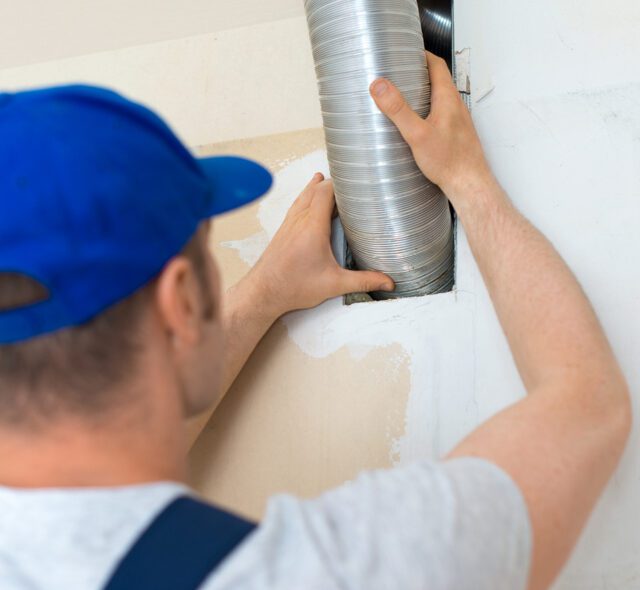 Energy Recovery Ventilators (ERVs)
ERVs transfer both heat and moisture between incoming and outgoing air streams. They are ideal for Maryland’s humid climate because they help manage indoor humidity levels.
Heat Recovery Ventilators (HRVs)
HRVs transfer heat from outgoing air to incoming air during colder months, improving efficiency while maintaining a steady flow of fresh air.
Without proper ventilation, energy retrofit measures that increase airtightness can unintentionally create poor air quality and condensation problems. Mechanical ventilation ensures that fresh air enters in a controlled, energy-efficient way.
Reducing Indoor Chemical Sources
For many indoor air quality issues, source control is the most effective solution. That means reducing or eliminating pollutant sources whenever possible.
Smart steps include:
- Choosing low-VOC or no-VOC paints and finishes
- Selecting furnishings and building materials with low chemical emissions
- Using cleaning products with minimal harsh chemicals
- Maintaining indoor humidity between 30% and 50% to reduce mold growth
- Testing for radon, the second leading cause of lung cancer
- Ensuring fuel-burning appliances are properly vented
- Installing carbon monoxide alarms
Radon can enter through cracks in foundations and floors in contact with the ground. Given Maryland’s geology, testing is essential.
The Maryland Department of the Environment provides guidance on indoor air quality risks, including mold, radon, and VOC exposure. Taking simple steps to reduce indoor chemical sources complements air sealing and ventilation improvements.
The Whole-House Approach to a Healthy Home
Indoor air quality in Maryland homes is something every Maryland homeowner should take seriously, given that it directly affects your family’s health and comfort. It is also not a single-issue problem. It is the result of how your home is built, sealed, ventilated, and maintained.
The three-part approach works because each component supports the others:
- Air sealing reduces uncontrolled air infiltration
- Mechanical ventilation provides intentional fresh air exchange
- Source control reduces indoor air pollutants at their origin
Together, these strategies create a healthier home and a more controlled indoor environment. You gain improved comfort, stronger home energy efficiency, and better protection against mold and moisture.
For best results, work with a qualified home performance contractor who understands building science and takes a whole-house approach.
Contact DeVere Insulation & Home Performance today to schedule a Healthy Home Assessment and start breathing easier in your Maryland home.
References:
Maryland Department of Health. “Healthy Homes.” Maryland Department of Health, https://health.maryland.gov/phpa/OEHFP/EH/pages/healthy-homes.aspx
Maryland Department of the Environment. “Indoor Air Quality.” MDE Public Health, https://mde.maryland.gov/publichealth/pages/indoorairquality.aspx
Smart Energy Design Assistance Center. “Build Tight, Ventilate Right.” University of Illinois, https://smartenergy.illinois.edu/wp-content/uploads/2024/01/Build-Tight-Ventilate-Right_FINAL.pdf
University of Alaska Fairbanks Cooperative Extension Service. “Insulating an Existing House.” UAF CES, https://www.uaf.edu/ces/publications/database/energy/files/pdfs/EEM-04452-Insulating-Existing-House.pdf
University of Florida IFAS Extension. “Energy Efficient Homes: Indoor Air Quality and Energy.” EDIS, https://edis.ifas.ufl.edu/publication/FY1044
U.S. Consumer Product Safety Commission. “The Inside Story: A Guide to Indoor Air Quality.” CPSC.gov, https://www.cpsc.gov/Safety-Education/Safety-Guides/Home/The-Inside-Story-A-Guide-to-Indoor-Air-Quality
U.S. Environmental Protection Agency. “Care for Your Air: A Guide to Indoor Air Quality.” EPA, https://www.epa.gov/indoor-air-quality-iaq/care-your-air-guide-indoor-air-quality
U.S. Environmental Protection Agency. “Improving Indoor Air Quality.” EPA, https://www.epa.gov/indoor-air-quality-iaq/improving-indoor-air-quality