 Warm air rises. That simple principle makes your attic one of the most important areas of your home to insulate properly.
Without adequate attic insulation, heated air escapes upward during winter, forcing your furnace to work harder just to maintain comfortable indoor temperatures. In summer, an under-insulated attic can reach 140°F or more, allowing intense heat to radiate down into living spaces and overwhelm your air conditioner.
Because of these conditions, both Maryland and Virginia building codes require high attic insulation levels, typically R-49 or higher. The U.S. Department of Energy recommends attic insulation levels between R-49 and R-60 for homes in this climate zone.
According to the U.S. Environmental Protection Agency, homeowners can save around 15% on heating and cooling costs by sealing air leaks and adding insulation in attics and other critical areas.
This guide breaks down three common attic insulation approaches for Maryland and Virginia homes, rated Good, Better, and Best, so you can choose the right balance of cost, comfort, and long-term performance.
Good: Blown-In Fiberglass Insulation
What It Is
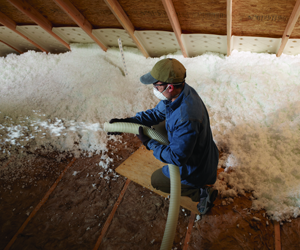
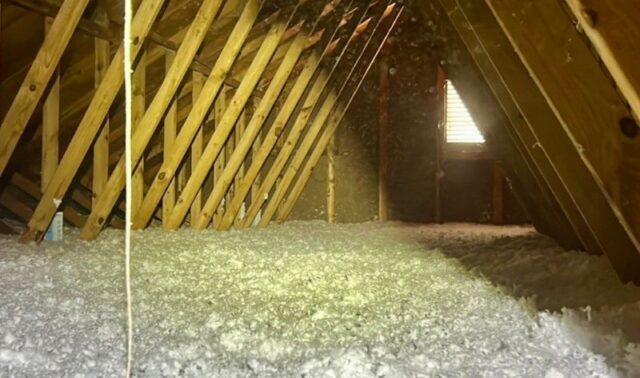
Blown-in fiberglass insulation is a solid “good” option for both new construction and retrofit projects.This approach uses loose-fill fiberglass material blown evenly across the attic floor, forming a continuous blanket of insulation over the ceiling below.
The material consists of tiny glass fibers, often made from recycled glass. Builders favor blown-in fiberglass because it installs quickly and offers a cost-effective way to meet basic insulation requirements without cutting and fitting batts around framing.
Benefits
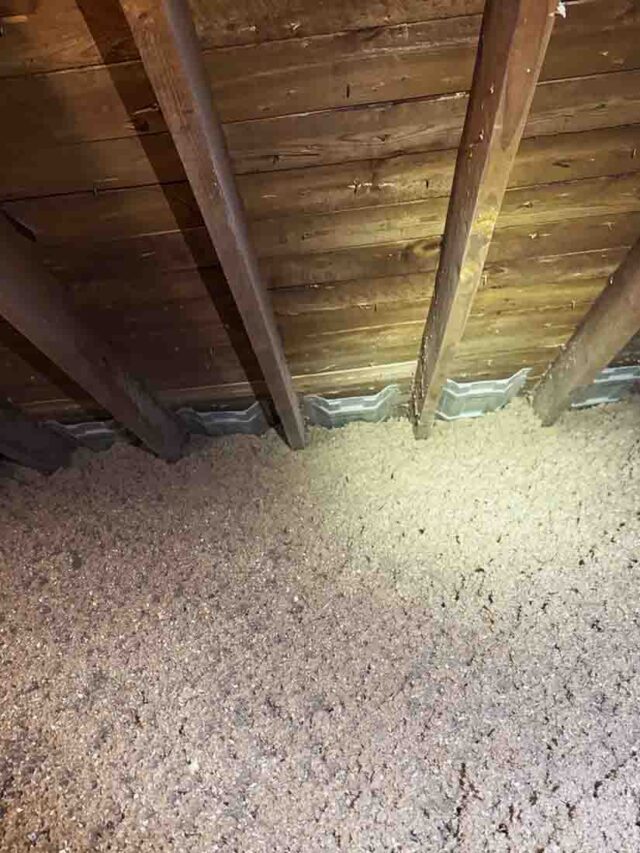
Blown-in fiberglass is one of the most affordable and fastest attic insulation solutions available, making it attractive for budget-conscious homeowners. It provides more consistent coverage than fiberglass batts by filling in around joists, wiring, and other obstructions.
The material is lightweight, non-combustible, and moisture-resistant. When installed at the correct depth, loose-fill fiberglass can reach recommended regional R-values. In Maryland and Virginia, approximately 18–20 inches of blown fiberglass is typically needed to achieve an R-49 rating, which aligns with current energy code requirements.
Adding this insulation immediately improves a home’s thermal resistance and reduces heat transfer through the ceiling.
Considerations
On its own, fiberglass insulation does not seal air leaks. Because fiberglass is porous, air can still move through gaps and cracks in the attic floor around plumbing penetrations, wiring holes, recessed lights, and chimney chases. This air leakage undermines insulation performance through stack effect, allowing conditioned air to escape.
Fiberglass also has a relatively low R-value per inch, roughly R-2.2 per inch, meaning proper depth and density are critical. If insulation is installed too thinly or disturbed later, its effectiveness drops.
Proper attic ventilation is essential. Soffit and ridge vents must remain clear to allow moisture to escape. Installers use baffles or chutes at the eaves to maintain airflow and prevent insulation from blocking vents.
In the humid Mid-Atlantic climate, a vapor barrier on the warm side of the insulation, or vapor-retarder ceiling paint, helps prevent winter condensation in the attic.
Bottom line: Blown-in fiberglass delivers good basic insulation, but its performance improves dramatically when paired with air sealing.
Better: Blown-In Fiberglass With Air Sealing
What It Is
This “better” approach combines blown-in fiberglass insulation with comprehensive attic air sealing. Before insulation is added, gaps and penetrations between the living space and attic are sealed using foam, caulk, or weatherstripping.
Air sealing targets include plumbing penetrations, electrical wiring holes, recessed lighting fixtures, attic hatches, HVAC chases, and other openings that allow air leakage. Once sealed, the attic floor is covered with blown-in fiberglass insulation. The result is an attic that is insulated and far less leaky.
Benefits
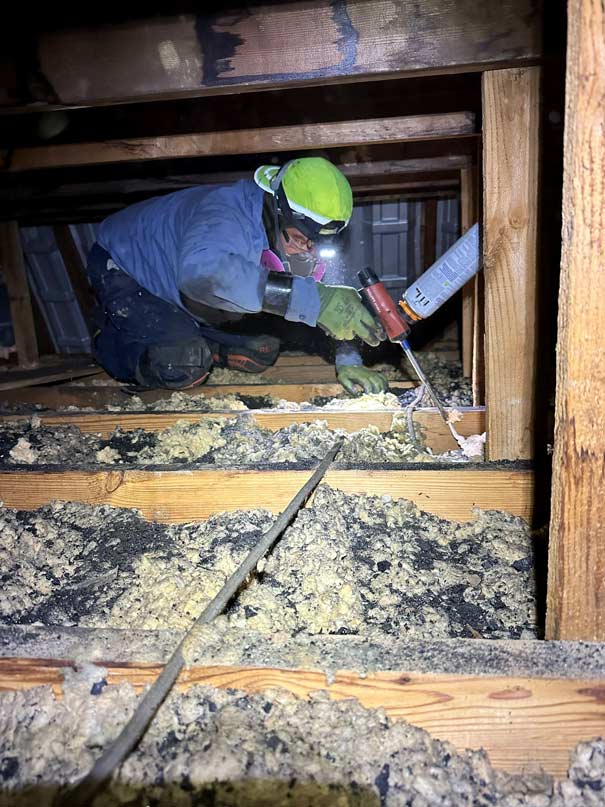
Pairing attic air sealing with insulation dramatically improves energy efficiency and comfort. Homes that are not air-sealed constantly exchange indoor and outdoor air, forcing HVAC systems to work overtime. Attic bypasses are one of the largest contributors to this energy loss. Sealing them ensures insulation can perform as intended, without air currents stripping away its effectiveness.
The EPA estimates that sealing and insulating together can reduce heating and cooling costs by about 15% on average, significantly more than insulation alone.
Air sealing also improves moisture control. Preventing warm indoor air from rising into a cold winter attic reduces the risk of condensation. This approach addresses both conductive heat loss (with insulation) and convective heat loss (with air sealing), creating a powerful one-two efficiency upgrade.
Considerations
Air sealing adds labor, time, and upfront cost compared to adding insulation alone. Every penetration must be identified and sealed, which can be messy and detail-intensive work. It is often best handled by professionals or detailed DIYers. However, this upfront effort pays off significantly in energy savings and comfort.
Modern building codes recognize its importance. New homes in Maryland and Virginia must pass blower door tests confirming a required level of airtightness. Air sealing is now standard practice, not an optional upgrade.
When combined with sufficient blown-in fiberglass to achieve an R-49 rating, this method delivers excellent performance at a lower cost than spray foam, while capturing many of the same efficiency benefits.
Best: Spray Foam Insulation
What It Is
The “best” attic insulation approach uses spray foam insulation applied directly to the underside of the roof deck and rafters rather than the attic floor. This creates a sealed, unvented conditioned attic that becomes part of the home’s thermal envelope, which effectively turns the attic into a sealed, unventilated conditioned space.
Spray foam attic insulation is applied as a two-part liquid that expands and hardens into a solid layer. There are two main types of spray foam: open-cell and closed-cell. Open-cell foam is lighter and softer, with a lower R-value per inch, while closed-cell foam is denser and more rigid, providing higher insulation and moisture resistance. Closed-cell foam is typically used for maximum attic performance. As it expands, spray foam fills cracks and crevices, insulating and air sealing in a single step. Properly installed spray foam provides the highest level of energy protection amongst the options presented.
Benefits
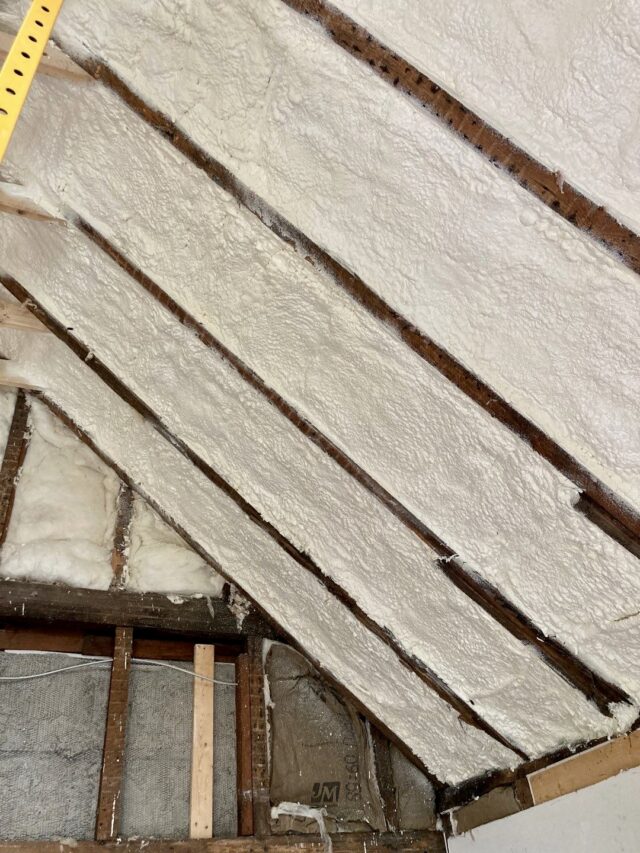 Spray foam delivers exceptional insulating power and airtightness. Closed-cell foam provides roughly R-6 per inch, allowing high R-values with less thickness. About 7–8 inches of closed-cell foam can achieve an R-49 rating.
By insulating in a continuous layer along the roofline, the attic becomes part of the home’s conditioned envelope. This system eliminates most traditional attic air leaks and thermal bridges. The attic stays much closer to indoor temperatures year-round. In summer, it no longer traps the extreme heat that results in downward heat radiation, easing the load on your air conditioner. In winter, warm air that would otherwise escape outdoors stays inside the conditioned space, reducing your heating system’s run time.
Closed-cell foam also acts as a vapor and moisture barrier, which is especially beneficial in humid climates, as it keeps moist outside air from infiltrating. It does not settle over time, adds structural rigidity, and improves indoor air quality by blocking outdoor pollutants more effectively than fibrous insulation.
Considerations
The main drawbacks of spray foam are that it is the most expensive of the three options, often costing significantly more than blown-in insulation, and that it requires professional installation. During application, areas must be ventilated, and occupants typically should vacate until curing is complete.
Because this approach creates an unvented attic, moisture management must be properly designed. Closed-cell foam generally handles this well, while open-cell foam may require additional vapor control. Fire codes require spray foam insulation to be covered with an approved thermal barrier if the attic is accessible.
In new construction, spray-foamed attics are straightforward to plan. In existing homes, retrofitting is possible by foaming the roofline from the inside, but it may require removing old floor insulation and sealing off existing vents.
Despite the complexity, spray foam remains the gold standard for peak attic performance and long-term energy savings.
Choosing the Right Attic Insulation Option
The right attic insulation choice depends on your budget, home design, and efficiency goals. From good to better to best — blown-in fiberglass, fiberglass with air sealing, and spray foam — each step up can improve comfort, efficiency, and air control. The best choice depends on your home and priorities, but higher R-values and proper air sealing consistently deliver better performance. In Maryland and Virginia’s climate, attic insulation is not an area to cut corners.
No matter which method you choose, aim for at least R-49 to R-60 to meet current recommendations and stop energy loss at the source. Proper insulation combined with air sealing keeps your home comfortable year-round and prevents wasted heating and cooling dollars.
Ready to Upgrade Your Attic?
To learn more or determine the best attic insulation approach for your home, contact DeVere Insulation and Home Performance for a professional evaluation.
References:
Maryland Energy Administration. (n.d.). Your home and the energy code [PDF]. Maryland.gov. https://energy.maryland.gov/documents/yourhomeandtheenergycode.pdf
U.S. Environmental Protection Agency. (n.d.). Methodology for estimated cost and savings: Seal and insulate. ENERGY STAR. https://www.energystar.gov/saveathome/seal_insulate/methodology
University of Maryland Extension. (n.d.). Home energy insulation. University of Maryland. https://extension.umd.edu/resource/home-energy-insulation
Virginia Cooperative Extension. (n.d.). Insulation (Publication 2908-9025). Virginia Tech. https://www.pubs.ext.vt.edu/2908/2908-9025/2908-9025.html