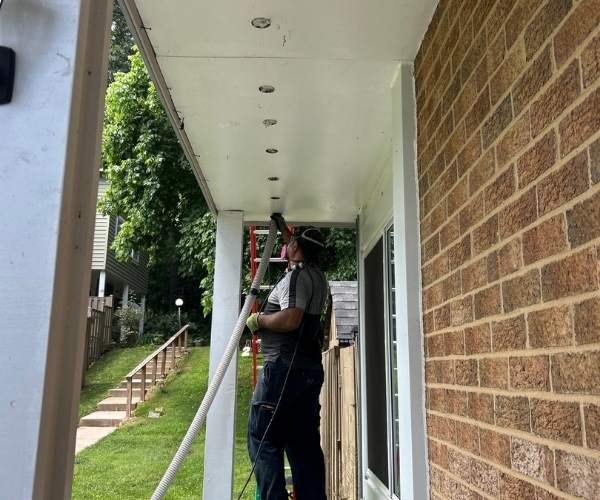
Homes in the Baltimore area frequently include cantilevered sections such as bay windows, bump-outs, and rooms over porches or garages, but these features are among the most commonly under-insulated and poorly air-sealed areas during construction. When remodeling skips or shortcuts cantilever insulation and air sealing cantilever areas, the result is cold floors, drafty rooms, moisture problems, and higher energy bills from day one.
The U.S. Department of Energy identifies cantilevered floor areas as locations that must be insulated, and its Building America program emphasizes that proper blocking, air sealing, and insulation must be installed during the framing stage, before these cavities are enclosed and inaccessible. If these steps are missed, the problems become permanently built into the home.
Cantilevers are sections of a home that extend beyond the foundation or supporting wall below. Because these areas have shallow construction cavities exposed to outdoor air on multiple sides, they require careful cantilever floor insulation and air sealing when retrofitting a home with insulation. When properly installed, insulated and sealed cantilevers prevent cold floors, reduce energy waste, and help the home meet Maryland’s 2021 IECC R-value requirements from day one.
Retrofitting an existing home with a cantilever? The right insulation contractor will address these areas during framing, before the walls go up and access is lost.
Baltimore sits in IECC Climate Zone 4A (mixed-humid), and Maryland adopted the 2021 IECC in May 2023, which includes specific insulation and air sealing requirements for the building envelope. Getting cantilevers right is not optional; it’s part of building a code-compliant, high-performance home.
What Is a Cantilever and Why Does It Matter?
Understanding Cantilever Construction
 Cantilevers are structural extensions that protrude past the home’s foundation or supporting wall. Common examples include bay windows, upper-floor bump-outs, and rooms built over porches or garages, which are all popular design features in Baltimore-area homes.
The U.S. Department of Energy recommends insulating any portion of a floor that is cantilevered beyond the exterior wall below. However, the shallow depth of these cavities makes it difficult for standard insulation alone to meet local R-value requirements. Without proper rigid foam blocking and a continuous thermal barrier, these areas become weak points in the home’s performance.
Why Cantilevers Are Energy Weak Points
Cantilevers are especially vulnerable to air infiltration because they are exposed on multiple sides and often contain gaps where framing members meet. Floors that extend beyond exterior walls are among the most common sources of air leakage.
Poorly sealed cantilevers allow outside air, moisture, and even pests to enter the home. This airflow undermines insulation performance, leading directly to cold floors, drafts, and long-term comfort issues.
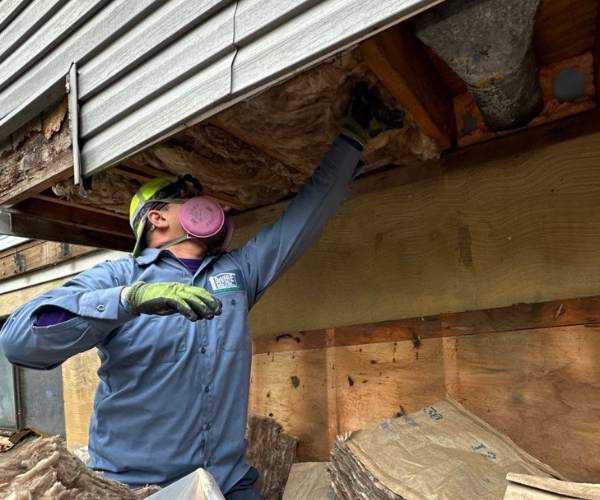
Once a cantilever is enclosed with sheathing, siding, and interior finishes, accessing the cavity becomes difficult and expensive. That makes the construction phase the best opportunity to properly install cantilever insulation and complete air sealing cantilever work.
Why Cantilevers Need Both Insulation and Air Sealing
The Role of Insulation
Insulation reduces heat transfer through the building envelope, helping maintain consistent indoor temperatures. In cantilevered areas, proper cantilever floor insulation prevents heat loss through exposed floor assemblies and moderates temperature differences across cantilever cavities.
 The 2021 IECC sets specific R-value requirements for floors over unconditioned spaces in Climate Zone 4. Meeting these standards during construction and insulating cantilevers correctly ensures compliance and long-term energy efficiency.
The Critical Role of Air Sealing
While insulation slows heat transfer, it does not stop air movement. According to the U.S. Department of Energy, air movement accounts for more than 98% of water vapor movement in building cavities, making air sealing cantilever assemblies critical for both energy performance and moisture control.
Air sealing alone does not eliminate the need for insulation to reduce heat flow, and insulation alone does not stop air leaks, meaning that both are needed together for effective performance.
Professional air sealing services ensure that all gaps, seams, and penetrations are sealed, preventing air infiltration and protecting the home’s thermal barrier.
Energy Savings Potential
ENERGY STAR estimates that homeowners can save an average of 15% on heating and cooling costs by properly air sealing and insulating key areas of the home, including floors over unconditioned spaces. When cantilevers are addressed during construction, these savings begin immediately and continue for the life of the home.
Proper Cantilevers Insulation and Sealing During Construction
Rigid Foam Blocking and Air Sealing
The DOE’s Building America program recommends installing rigid foam blocking between floor joists over the supporting wall. This blocking acts as a critical air barrier, preventing outside air from entering the cantilever cavity.
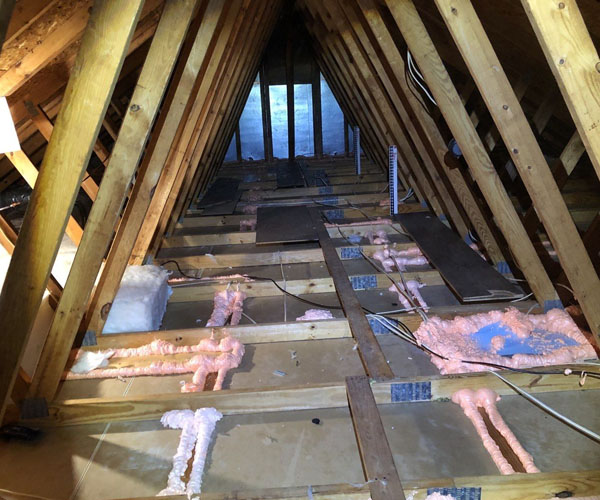
After installation, spray foam is applied around all edges of the blocking to create a continuous seal. Every penetration, including wiring, plumbing, and ductwork, must also be sealed to eliminate air infiltration.
A rigid, unvented soffit is then installed on the underside of the insulation to enclose and protect the cavity from outdoor air exposure and maintain the integrity of the thermal barrier.
Spray Foam: The All-in-One Solution
Spray foam insulation can insulate and air seal in a single application, making it especially effective for the irregular shapes and tight spaces found in cantilevers.
Closed-cell spray foam provides a high R-value per inch, resists moisture, and conforms tightly around pipes, wires, and framing members.
Fiberglass Batts
Fiberglass batts can also be used for cantilever floor insulation, but only when combined with proper air sealing and rigid foam blocking.
The Building America program recommends installing insulation in full contact with the subfloor to prevent gaps. However, without proper air sealing, fiberglass alone will not prevent heat loss or drafts.
University of Maryland Extension notes that insulation alone will not stop heat loss if air is leaking, as gaps and cracks must be sealed first. This is why a complete system of air sealing plus insulation is required to achieve true energy efficiency.
Why Your Home Needs an Experienced Insulation Contractor
Cantilever insulation and air sealing require coordination with the framing process. Blocking, sealing, and insulation must be installed at specific stages of construction before the cavity is enclosed.
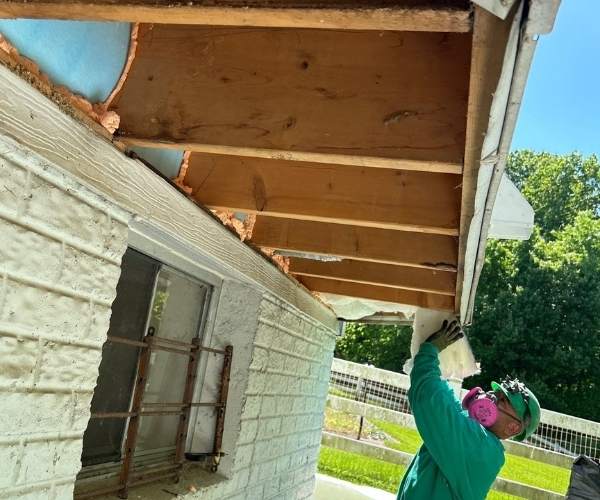 Many builders focus on structural completion, but without a contractor who understands building envelope performance, critical steps can be missed. Once overlooked, these issues are difficult and costly to fix.
Maryland’s energy code, based on the 2021 IECC, requires proper insulation and air sealing throughout the home’s thermal barrier. An experienced insulation contractor ensures your home meets these requirements and passes inspection.
Working with a qualified team also ensures that all penetrations, including electrical, plumbing, and HVAC, are sealed correctly, preventing long-term air infiltration issues.
FAQ Section
Q: What is a cantilever on a house?
A: A cantilever is a section of a home that extends beyond the foundation or lower supporting wall. Common examples in construction include bay windows, upper-floor bump-outs, and rooms built over porches or garages.
Q: How should a cantilevered floor be insulated during construction?
A: During the framing stage, rigid foam blocking is installed between floor joists over the supporting wall. Spray foam is then applied around all blocking and penetrations to create a continuous air seal, followed by insulation of the joist cavities with fiberglass batts or additional spray foam.
Q: Why do cantilevers need air sealing in addition to insulation?
A: Insulation alone does not stop air movement. The DOE notes that air movement accounts for more than 98% of water vapor transport in building cavities. Without air sealing, unconditioned outdoor air can flow through the insulation, reducing its effectiveness and causing cold floors and drafts.
Q: Can cantilever insulation be added after a home is built?
A: Yes, and it requires the right type of experience. Once the cantilever cavity is enclosed by exterior siding and interior finishes, accessing it requires removing materials. It’s important to hire an insulation contractor with a track record of successfully improving cantilevers in existing homes.
Cantilevers are a common design feature in Baltimore-area homes, but they require specialized attention during the build to perform properly. When these areas are overlooked, the result is cold floors, energy loss, and long-term comfort issues that are difficult to fix after the fact.
Properly insulating and air sealing cantilevers in Baltimore homes during construction creates a complete thermal barrier, improves energy efficiency, and ensures compliance with modern building codes from day one.
Contact DeVere Insulation Home Performance today to learn how our experienced team ensures every existing home’s cantilever is insulated and air sealed, delivering comfort that lasts.
References
Colorado State University Extension. (n.d.). Air sealing Colorado homes. Colorado State University.
https://extension.colostate.edu/resource/air-sealing-colorado-homes/
Maryland Energy Administration. (n.d.). Building codes. Maryland Department of Energy.
https://energy.maryland.gov/pages/policy-energy-codes.aspx
U.S. Department of Energy. (n.d.). Air sealing your home. Energy Saver.
https://www.energy.gov/energysaver/air-sealing-your-home
U.S. Department of Energy. (n.d.). Moisture control. Energy Saver.
https://www.energy.gov/energysaver/moisture-control
U.S. Department of Energy. (n.d.). Strategy guideline: Quality management in existing homes. Building America.
https://www1.eere.energy.gov/buildings/publications/pdfs/building_america/strategy_guide_quality_mgmt.pdf
U.S. Department of Energy. (n.d.). Tight air-sealed homes. Building Science Education.
https://bsesc.energy.gov/energy-basics/tight-air-sealed-homes
U.S. Department of Energy. (n.d.). Where to insulate in a home. Energy Saver.
https://www.energy.gov/energysaver/where-insulate-home
U.S. Environmental Protection Agency. (n.d.). Why seal and insulate? ENERGY STAR.
https://www.energystar.gov/saveathome/seal_insulate/why-seal-and-insulate
University of Maryland Extension. (n.d.). Home energy: Insulation. University of Maryland.
https://extension.umd.edu/resource/home-energy-insulation
University of Minnesota Extension. (n.d.). Framing and air sealing homes in cold climates. University of Minnesota.
https://extension.umn.edu/energy-efficiency/framing-and-air-sealing-homes-cold-climates