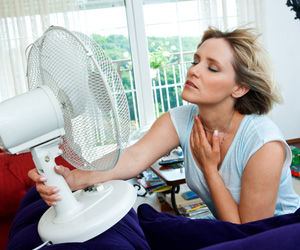
If the “upper floor is hot in summer” problem is something you deal with every year, you’re not alone. Many Maryland homeowners assume their HVAC system is the issue when their second floor feels unbearable while the first floor stays comfortable. But the real culprit is something most people have never heard of: stack effect home phenomenon.
Here’s what’s actually happening. Warm air naturally rises and escapes through unsealed attic penetrations, such as recessed lights, plumbing vents, and electrical boxes. As that air escapes, it pulls in hot, humid outdoor air through gaps in the lower parts of your home. This creates a continuous loop that leaves your second floor too hot and your HVAC system struggling to keep up.
According to the U.S. Department of Energy, air leakage accounts for 25–40% of heating and cooling energy use in a typical home. Meanwhile, ENERGY STAR insulation recommendations show homeowners can save an average of 15% on heating and cooling costs by combining air sealing with proper insulation. Yet many homes in Maryland still fall short of these standards.
Your upper floor is hot because of stack effect: warm air rises through unsealed attic penetrations and is replaced by hot outdoor air entering through the lower envelope. Maryland sits in IECC Climate Zone 4A, where the 2021 IECC requires R-49 in attics — but ENERGY STAR recommends R-60 for uninsulated attics in this zone. Air sealing the attic floor and upgrading insulation to recommended levels can reduce heating and cooling costs by up to 15% and make upper floors comfortable year-round.
Not sure if your home’s insulation and air sealing are up to the task? A free insulation evaluation can pinpoint exactly where your home is losing conditioned air.
What Stack Effect Is Doing to Your Home
How Stack Effect Works
 The stack effect home dynamic (also called the chimney effect) is driven by temperature and pressure differences between indoors and outdoors.
In summer, warm indoor air rises and leaks out through unsealed attic penetrations such as recessed lights, plumbing vents, electrical boxes, duct chases, and attic hatches. This creates negative pressure in the upper floors, pulling in hot, humid outdoor air through gaps in the lower envelope, such as windows, outlets, rim joists, and crawl spaces.
This constant airflow cycle is why your “upper floor hot in summer” problem doesn’t go away. The DOE confirms that reducing air leakage is one of the most cost-effective ways to improve comfort and efficiency.
Why Your HVAC System Can’t Compensate
Your HVAC system is not designed to fight physics. Cool, conditioned air is denser than warm air and settles to lower floors, while upper floors receive the least cooling benefit. Running the HVAC harder does not fix the root cause. Instead, it increases energy consumption while the stack effect continues to cycle unconditioned air through the home.
Even worse, ENERGY STAR confirms that air leakage alone accounts for up to 40% of energy loss in homes.
If you’re trying to fix the “second floor too hot” issue by adjusting your thermostat, you’re treating the symptom, not the cause. For a real solution, start with professional air sealing.
The Insulation Gap Beneath Your Attic
Maryland’s Code vs. ENERGY STAR Recommendations
Maryland adopted the 2021 IECC, which requires a minimum attic insulation R-value of R-49. But code minimums are not designed for comfort or energy savings, only baseline compliance. Falling short of ENERGY STAR recommendations means that Maryland homeowners whose homes are up to code may still be missing energy efficiency and savings.
Here’s how most homes compare:
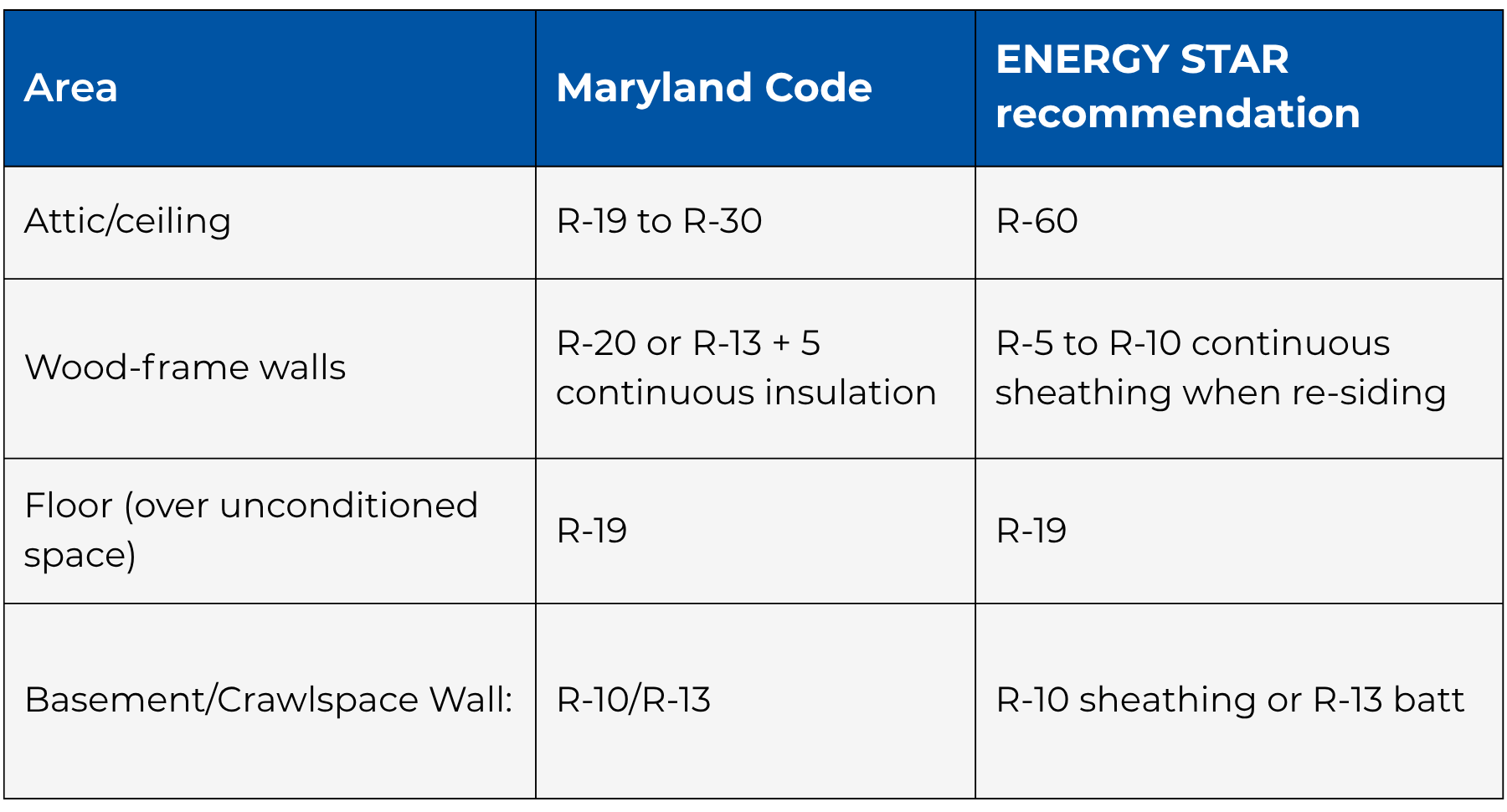
Even when homes meet Maryland code, they can still fall short—often with up to 3× less insulation than ENERGY STAR recommendations (see chart).
Why the Gap Matters
In Maryland’s mixed-humid climate, under-insulated attics act like radiators.
- Heat builds in the attic and pushes downward
- High humidity increases discomfort
- Cooling systems work harder and longer
The DOE confirms heating and cooling account for the largest share of home energy use, while home energy efficiency upgrades like insulation reduce both costs and environmental impact.
The savings are clear. NREL’s ResStock analysis identifies upgrading attic insulation and air sealing as top cost-effective energy efficiency improvements for Maryland homes. Additionally, ENERGY STAR estimates you can cut energy costs by about 15% by air sealing and adding insulation in attics, floors, and basements.
The Fix — Air Sealing First, Then Insulation
Priority 1: Attic Air Sealing
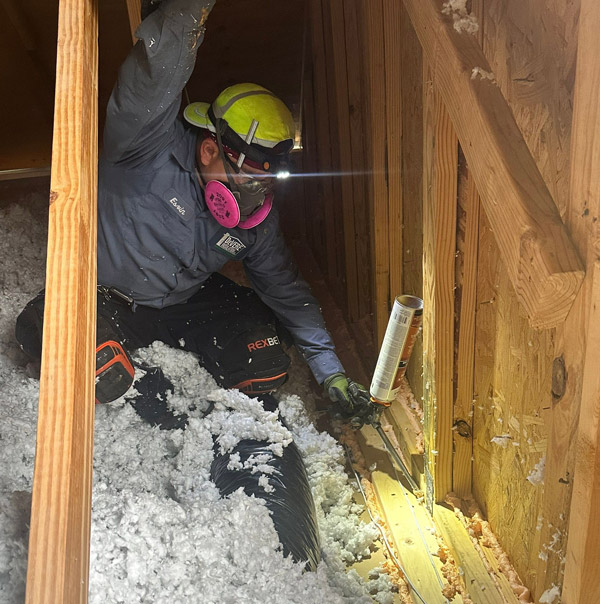 Air sealing must come before insulation. The DOE notes that air sealing alone does not eliminate the need for proper insulation, but insulation without air sealing allows the stack effect to continue cycling unconditioned air through gaps.
Key areas to seal include:
- Recessed lights
- Plumbing penetrations
- Electrical boxes
- Attic hatches
- Duct chases
Spray foam insulation is an ideal solution for sealing irregular gaps and providing both an air barrier and insulation in a single application.
Priority 2: Attic Insulation Upgrade
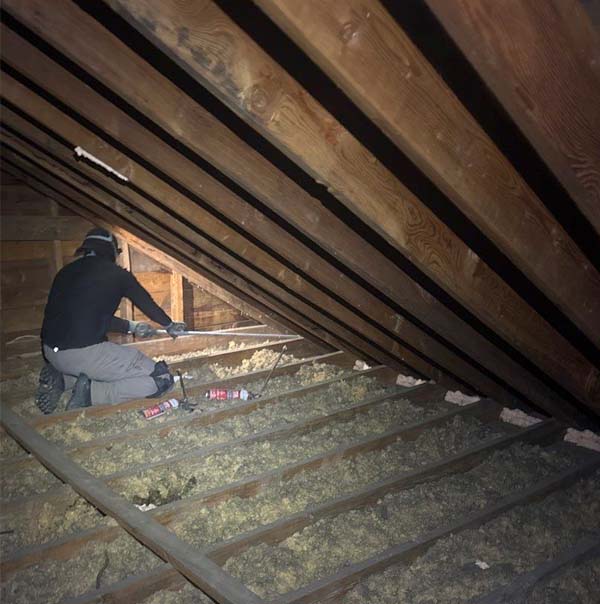
Once air sealing is complete, insulation does its job properly. The attic is the single highest-impact insulation upgrade for Maryland homes because heat radiates down from the roof deck all summer.
Options include:
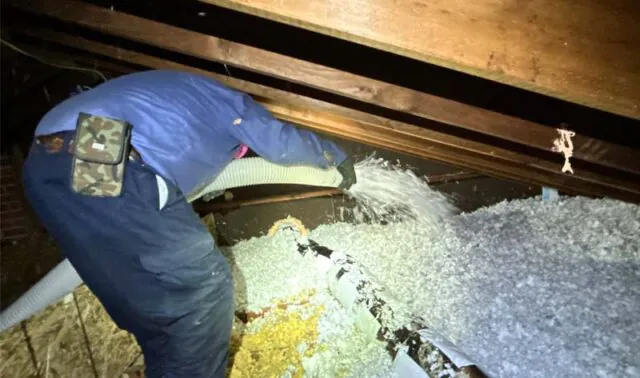
- Blown-in insulation attic (fiberglass or cellulose)
- Fiberglass batts
- Spray foam
- Fiberglass: ~3.2 per inch
- Cellulose: ~3.5 per inch
- Spray foam: ~6.5 per inch
Upgrading your attic insulation to R-49 or R-60 using blown-in fiberglass or cellulose is the most cost-effective path for most homes and homeowners.
Priority 3: Basement and Crawl Space Sealing
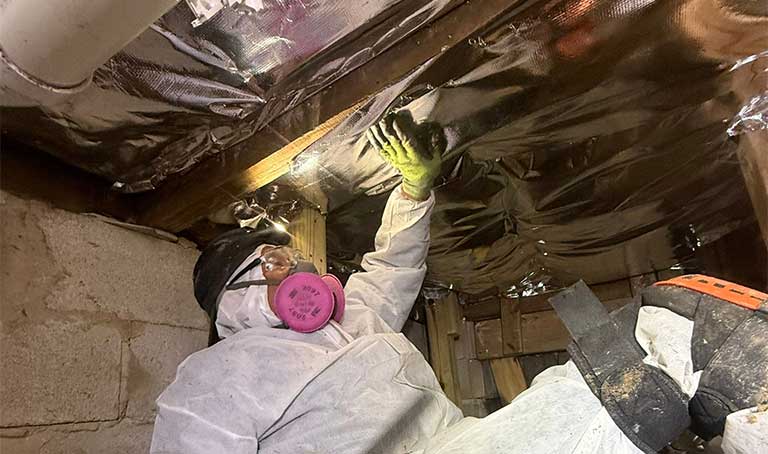 Stack effect starts at the bottom. The bottom of the building envelope is where replacement air enters during the stack effect.
Air enters through:
- Rim joists
- Crawl spaces
- Basement gaps
Sealing and insulating these areas supports the entire building envelope and improves home energy efficiency in Maryland. ENERGY STAR recommends R-10 insulative wall sheathing or R-13 batt for basement and crawl space walls in Climate Zone 4A.
Frequently Asked Questions
Q: Why is my upper floor so much hotter than the first floor in summer?
A: Stack effect causes warm air to rise and escape through unsealed attic penetrations. This creates negative pressure that pulls hot outdoor air into lower levels, while conditioned cool air — being denser — settles downward and never reaches upper floors effectively.
Q: What R-value does Maryland code require for attic insulation?
A: Under the 2021 IECC (adopted by Maryland and enforceable statewide as of May 2024), Climate Zone 4A requires R-49 for attic ceilings under the prescriptive compliance path.
Q: What R-value does ENERGY STAR recommend for Maryland attics?
A: ENERGY STAR recommends R-60 for uninsulated attics and R-49 for attics that already have 3–4 inches of existing insulation in Climate Zone 4A.
Q: Should I air seal before adding insulation?
A: Yes. The DOE emphasizes that air sealing should accompany any insulation upgrade for best results. Insulation slows heat transfer, but without air sealing, stack effect continues to cycle unconditioned air through gaps in the building envelope.
Q: How much can I save by air sealing and insulating?
A: ENERGY STAR estimates homeowners can save an average of 15% on heating and cooling costs by combining air sealing with upgraded insulation in attics, floors, and basements.
Q: What type of insulation is best for Maryland attics?
A: Blown-in cellulose and fiberglass are cost-effective for attic floor upgrades. Spray foam provides both insulation and an air barrier in a single application, making it ideal for sealing attic penetrations and hard-to-reach areas.
A hot upper floor is not a flaw in your HVAC system. Instead, it is a sign that the stack effect is cycling unconditioned air through your home because of insufficient air sealing and insulation.
The good news is that your second floor doesn’t have to stay too hot. The biggest opportunity is in your attic. Sealing penetrations and upgrading insulation from code-minimum levels to R-49 or R-60 is the single most impactful improvement for Maryland homes with uncomfortable upper floors.
If you’re ready to fix the problem at its source, Contact DeVere Insulation Home Performance today for a free insulation evaluation. Our experienced team identifies air leaks, measures existing insulation levels, and installs beyond code minimums so Maryland homeowners get real comfort and real savings — not just a passing inspection. Call (443) 770-1111 to get started.
References:
ENERGY STAR. “Air Sealing: Building Envelope Improvements.” U.S. Environmental Protection Agency, www.energystar.gov/ia/home_improvement/home_sealing/AirSealingFS_2005.pdf.
ENERGY STAR. “Methodology for Estimated Energy Savings from Sealing and Insulating.” U.S. Environmental Protection Agency, www.energystar.gov/saveathome/seal_insulate/methodology.
ENERGY STAR. “Recommended Home Insulation R–Values.” U.S. Environmental Protection Agency, www.energystar.gov/saveathome/seal_insulate/identify-problems-you-want-fix/diy-checks-inspections/insulation-r-values.
Maryland Energy Administration. “Building Codes.” State of Maryland, energy.maryland.gov/pages/policy-energy-codes.aspx.
National Renewable Energy Laboratory. “Maryland Residential Energy Efficiency Potential.” ResStock, U.S. Department of Energy, resstock.nrel.gov/factsheets/MD.
U.S. Department of Energy. “Air Sealing Your Home.” Energy Saver, www.energy.gov/energysaver/air-sealing-your-home.
U.S. Department of Energy. “Insulation.” Energy Saver, www.energy.gov/energysaver/insulation.
University of Maryland Extension. “Home Energy: Insulation.” University of Maryland, extension.umd.edu/resource/home-energy-insulation.