When homeowners think about improving energy efficiency, the attic is usually the first place that comes to mind, and for good reason. The attic is one of the largest sources of energy loss in a home. But adding insulation is not the same as adding the right amount of the right material for Maryland’s climate.
Because warm air naturally rises, an under-insulated attic allows conditioned air to escape year-round. During Maryland’s hot, humid summers and chilly winters, that can mean higher utility bills, uneven temperatures, and unnecessary strain on your HVAC system. According to the U.S. Department of Energy, heating and cooling account for the largest share of energy use in the typical home, making insulation one of the most effective ways to improve efficiency.
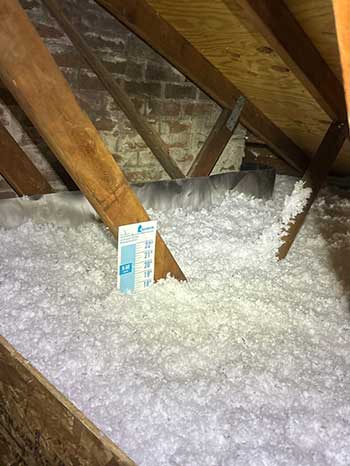
Most of Maryland, including Anne Arundel County and Glen Burnie, falls within IECC Climate Zone 4A, also known as a mixed-humid climate. For this zone, ENERGY STAR recommends approximately R-60 attic insulation in an uninsulated attic, or about R-49 added if 3–4 inches of insulation already exist. Blown-in fiberglass attic insulation is a cost-effective way to reach that target, especially when it can be installed over existing insulation. When paired with attic air sealing Maryland homeowners can achieve the comfort, efficiency, and performance those R-values are designed to deliver.
This guide explains what Climate Zone 4A means, why fiberglass attic insulation Maryland homeowners choose remains one of the most practical solutions available, and why air sealing is the other half of the equation.
Why Maryland’s Climate Zone 4A Shapes Your Attic Decision
Under the U.S. Department of Energy’s Building America program, most Maryland counties, including Anne Arundel (Glen Burnie), fall within IECC Climate Zone 4A insulation requirements. This climate classification is considered mixed-humid, meaning homes experience both significant heating demands during winter and cooling demands during summer.
 Unlike homes in purely cold or hot climates, Maryland homes must contend with seasonal temperature swings and elevated moisture levels influenced by the Chesapeake Bay and Atlantic Ocean. As a result, mixed-humid climate insulation strategies must address both heat transfer and moisture management.
ENERGY STAR recommends the following insulation levels for existing homes in Climate Zone 4:
- Attics: R-60 in uninsulated attics
- Existing attics with 3–4 inches of insulation: Add approximately R-49
- Floors: R-19
- Basement or crawlspace walls: R-10 continuous insulation or R-13 batt insulation
Maryland currently enforces the 2021 International Energy Conservation Code (IECC) through the Maryland Building Performance Standards, making these insulation levels increasingly important for homeowners looking to improve efficiency and comfort.
Moisture is another critical factor. The University of Maryland Extension notes that effective insulation strategies in Maryland must address both heat flow and moisture movement. That means achieving the proper R-value is important, but controlling air leakage is equally essential.
Three Reasons Fiberglass Works for Maryland Attics
1. It’s a Cost-Effective Way to Reach R-60
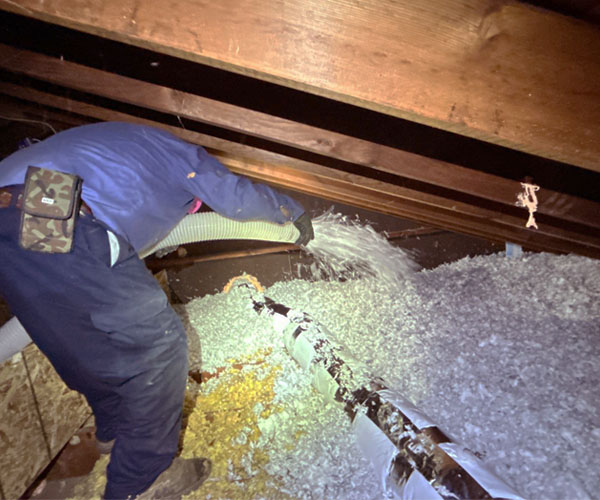
Blown-in fiberglass is a low-cost, fast-to-install material. One of the biggest advantages of blown-in fiberglass attic insulation is its ability to achieve recommended R-values without requiring a complete insulation replacement.
In many homes, installers can add new fiberglass over existing insulation to increase overall attic performance. This process of blowing insulation over existing attic insulation creates a continuous blanket across the attic floor while helping homeowners reach recommended levels without unnecessary demolition.
The DOE describes loose-fill and blanket (batt/roll) fiberglass as among the most common and economical types of home insulation. Because fiberglass is affordable, readily available, and quick to install, it remains one of the most practical options for attic insulation Maryland homeowners can choose when upgrading an existing attic.
2. It’s Made Largely from Recycled Content
Many homeowners are surprised to learn that fiberglass insulation contains a significant amount of recycled material.
Modern recycled glass fiberglass insulation is manufactured primarily from sand and recycled glass. By incorporating recycled content into the manufacturing process, fiberglass reduces the need for virgin raw materials while still providing reliable thermal performance.
As noted by the DOE, this makes fiberglass an environmentally responsible option that supports both energy efficiency and resource conservation.
3. With Air Sealing, It Performs Even Better
Fiberglass insulation is excellent at slowing conductive heat transfer. However, it does not stop air movement on its own.
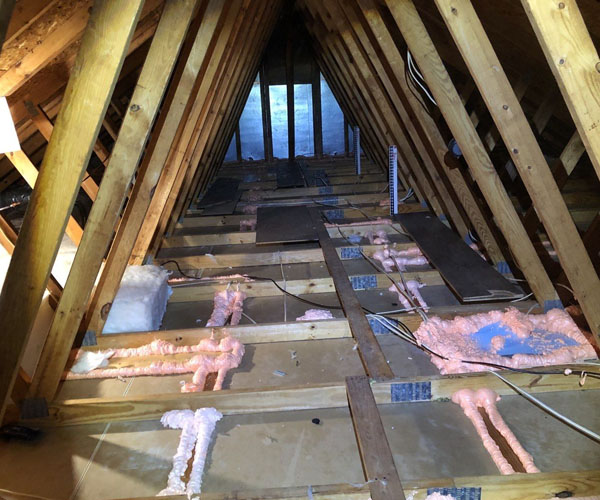 That’s why the most effective fiberglass attic insulation projects include air sealing as part of the upgrade. Without sealing gaps and penetrations, conditioned air can continue escaping through the attic floor, reducing the effectiveness of the insulation above it.
When homeowners compare fiberglass vs spray foam attic solutions, it is important to remember that fiberglass paired with proper air sealing often provides a highly cost-effective path to improved comfort and efficiency.
Air Sealing: The Other Half of the Job
Many homeowners focus exclusively on insulation thickness while overlooking air leakage.
Insulation slows heat transfer. Air sealing stops conditioned air from escaping through openings around plumbing penetrations, electrical wiring, recessed lighting, top plates, and other gaps in the attic floor.
In Maryland’s mixed-humid climate, air sealing provides another important benefit: reducing the movement of humid air into the attic. Controlling air movement helps improve comfort and supports better moisture management throughout the home.
ENERGY STAR estimates that homeowners can save an average of 15% on heating and cooling costs through a combination of air sealing and insulation improvements in attics, floors, crawlspaces, and basements.
For best results, attic-floor penetrations should be air sealed before installing new insulation. This ensures the new fiberglass blanket sits on top of a properly sealed boundary rather than covering up existing leaks. The most successful attic upgrades aren’t insulation-only projects. They’re insulation-and-air-sealing projects.
Frequently Asked Questions
What is the best attic insulation for a Maryland home?
For most Maryland homes in mixed-humid Climate Zone 4A, blown-in fiberglass is a cost-effective way to reach the recommended attic R-value, especially when added over existing insulation and paired with air sealing. The “best” choice still depends on the attic’s condition and whether the space is being converted to a conditioned attic.
What R-value do I need for an attic in Maryland?
ENERGY STAR recommends R-60 attic insulation for an uninsulated attic in Climate Zone 4, or roughly R-49 added if there are already 3–4 inches of insulation in place.
Can you add new fiberglass insulation over existing attic insulation?
Yes. Loose-fill fiberglass can be blown over existing attic insulation to restore the depth to the recommended R-value, which is one reason it is a practical retrofit material. Sealing attic air leaks before insulating makes the added insulation more effective.
Do I really need air sealing if I’m already adding insulation?
Yes. Fiberglass slows heat transfer but does not stop air movement. Without air sealing, conditioned air can continue escaping through leaks in the building envelope. ENERGY STAR attributes approximately 15% in heating and cooling savings to air sealing combined with insulation upgrades.
Is blown-in fiberglass good for a humid climate like Maryland’s?
It can be, when the attic is properly air sealed and any moisture sources are addressed. In a mixed-humid zone, the University of Maryland Extension stresses that an insulation strategy must manage both heat flow and moisture — not R-value alone.
Upgrade Your Attic the Right Way
For Maryland homeowners, improving attic performance isn’t simply about adding more insulation. It’s about installing the right amount of the right material for IECC Climate Zone 4A insulation requirements and addressing the air leaks that undermine performance.
When fiberglass attic insulation Maryland homeowners trust is paired with professional air sealing, the result is better comfort, lower energy bills, improved HVAC performance, and a more efficient home year-round.
Ready to improve your attic’s performance? Contact us for a free estimate.
References
ENERGY STAR. “Methodology for Estimated Energy Savings from Cost-Effective Air Sealing and Insulating.” U.S. Environmental Protection Agency, www.energystar.gov/saveathome/seal_insulate/methodology.
ENERGY STAR. “Recommended Home Insulation R-Values.” U.S. Environmental Protection Agency, www.energystar.gov/saveathome/seal_insulate/identify-problems-you-want-fix/diy-checks-inspections/insulation-r-values.
U.S. Department of Energy. “Building America Climate-Specific Guidance.” Office of Energy Efficiency and Renewable Energy, www.energy.gov/cmei/buildings/building-america-climate-specific-guidance.
U.S. Department of Energy. “Insulation.” Energy Saver, www.energy.gov/energysaver/insulation.
U.S. Department of Energy. “Why Energy Efficiency Matters.” Energy Saver, www.energy.gov/energysaver/why-energy-efficiency-matters.
U.S. Department of Energy. “Types of Insulation.” Energy Saver, www.energy.gov/energysaver/types-insulation.
University of Maryland Extension. “Home Energy: Insulation.” University of Maryland, extension.umd.edu/resource/home-energy-insulation.