Spring rain in Maryland is something you expect. What most homeowners don’t expect is what rain is doing underneath their home. Spring rain crawl space problems are common throughout Maryland, yet the unseen damage can build for months before anyone notices.
Most of Maryland sits in IECC Climate Zone 4A, a mixed-humid area, where wet spring soil and rising groundwater push moisture upward into homes with vented or unsealed crawl spaces. Left unaddressed, this can lead to structural rot, mold, and pests in your crawl space. But that moisture doesn’t stop at the floor. It can move into your living areas, bringing those mold spores, pests, and poor air quality with it.
A combined approach can stop it at the source. This approach includes proper exterior drainage, controlled humidity, and a crawl space that is properly air sealed, insulated, and has a sealed ground vapor barrier.
Not sure what’s happening under your home this spring? A professional crawl space evaluation can identify moisture, drainage, and air leakage issues before they become structural problems.
How Spring Rain Becomes a Crawl Space Problem
Mid-Atlantic spring weather brings heavy rain and rising water tables, pushing them against your foundation. Poor grading or missing drainage lets bulk water reach the crawl space perimeter, where it seeps in or evaporates upward through the soil. This often causes crawl space moisture Maryland homeowners rarely notice. Many older Maryland homes have vented crawl spaces, originally designed to dry out from outside air. But in our humid climate, those vents backfire, pulling in warm, moist air that condenses on cooler surfaces like joists, ductwork, and sill plates inside the crawl space.
Why “Out of Sight” Is the Worst Place for the Problem
The U.S. Environmental Protection Agency (EPA) notes that wet building materials must dry within 24–48 hours to prevent mold. In a crawl space, things can go unnoticed for weeks or more because no one is checking. By the time you notice a musty smell or a soft spot in the floor, the damage has been building for a long time.
The Four Problems Spring Moisture Causes
Problem 1: Drainage and Standing Water
Wet crawl space conditions in your Maryland home are a water management problem first, and an insulation problem second. Soil should slope away from your foundation and perimeter foundation drainage should be installed, as well as a capillary break under the slab or vapor barrier. Without those basics in place, bulk water will keep finding its way in regardless of anything else you do.
Problem 2: Pests (Termites and Carpenter Ants)
A damp crawl space is an open invitation for pests. Subterranean termites, native to Maryland, build mud shelter tubes from moist soil into wood because they depend on the moisture to survive. Carpenter ants also target damp or compromised wood for nesting. Finding a carpenter ant colony in your framing is itself a sign that there is or has been a water problem. Remember: where moisture goes, pests follow.
Problem 3: Mold
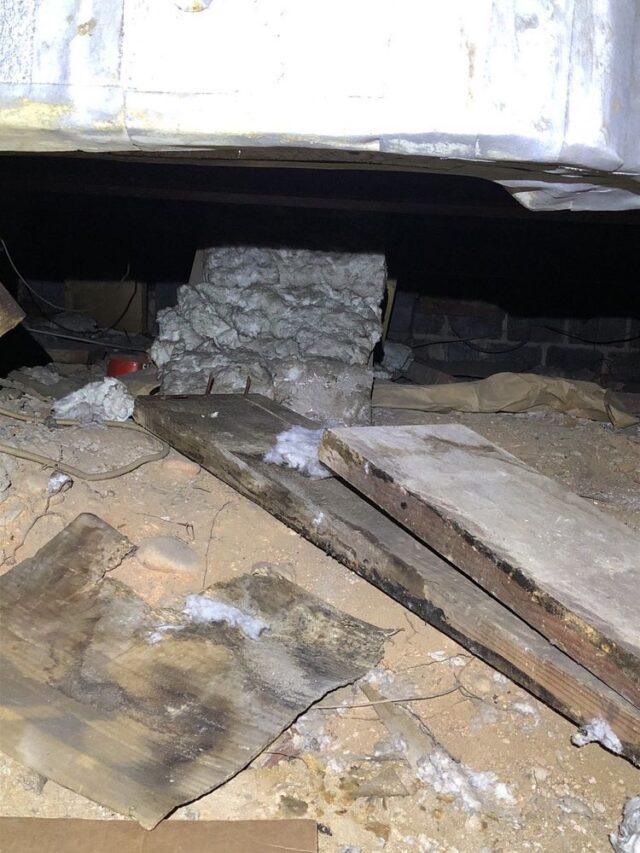 It’s estimated that dampness or visible mold can be found in roughly half of U.S. homes, with crawl spaces being a frequent source. Crawl space mold Baltimore homeowners deal with is a health issue, not just an aesthetic one. Mold allergens travel upward through your home and can trigger respiratory problems for anyone with allergies or asthma. Surface cleaning isn’t a lasting fix. Moisture problems should be corrected before any other work is done in your crawl space or basement area.
Problem 4: Indoor Air Quality
Many homeowners are surprised to learn that their crawl space is part of their home’s building envelope, even if it’s not finished square footage. And with air movement carrying more than 98% of moisture through building cavities, that means crawl space air is actively pulled into your living areas via the stack effect. Indoor air quality crawl space problems are real. The air your family breathes upstairs is partly from the crawl space.
How to Fix It (and Keep It Fixed)
Step 1: Fix the Water Path First
Before any sealing or insulation work begins, correct the drainage. Re-grade soil away from the foundation, extend downspouts, and address any active water entry. A vapor barrier won’t stop water from entering, so you must fix that first. Learn more about moisture and humidity control as part of a complete solution.
Step 2: Install a Sealed Ground Vapor Barrier
The next step is to install a sealed vapor barrier on your crawl space floor. The Department of Energy recommends placing a minimum 6-mil polyethylene sheet across your entire crawl space floor, with seams overlapped 12 inches and sealed at least 6 inches up the foundation walls. This stops soil vapor migration at the source.
Step 3: Air Seal and Insulate the Crawl Space Perimeter
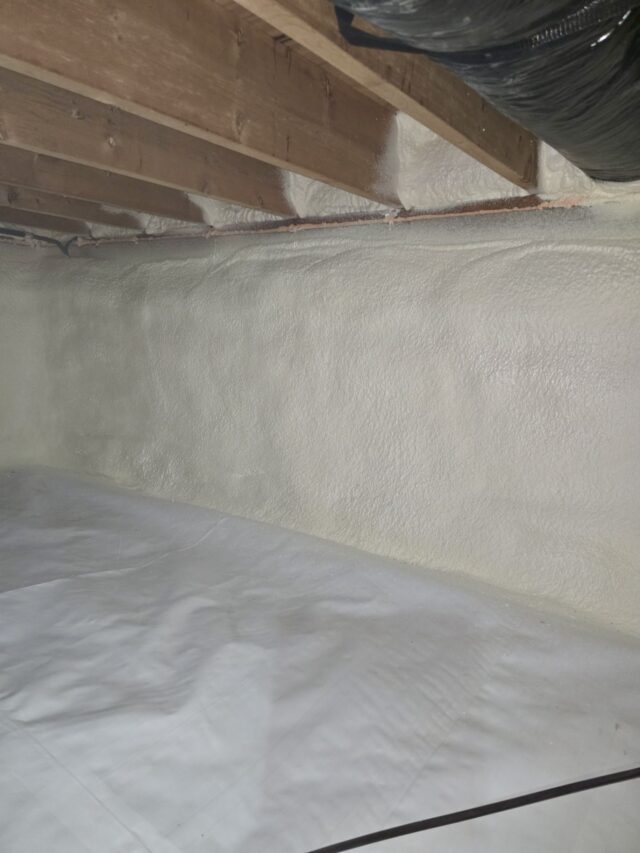 Once the floor is covered, air sealing and insulating the perimeter walls (not the subfloor above) of your unvented crawl space adds the crawl space to your home’s conditioned envelope. Spray foam crawl space wall applications are a popular choice for many homeowners. Spray foam insulation bonds tightly to foundation walls, creating both an air and moisture barrier. Completing crawl space air sealing paired with perimeter insulation meets Maryland’s 2021 IECC requirement of R-13 cavity insulation (or R-10 continuous insulation) for climate zone 4A crawl space work.
Step 4: Control Humidity Inside the Sealed Crawl Space
Crawl space insulation and air sealing in your Maryland home isn’t complete without addressing humidity. Once the space is sealed and insulated, a dedicated dehumidifier or supply-air system is a reliable way to keep relative humidity between 30–60% year-round. Crawl space humidity control maintains a sealed environment and helps protect your home in the long term.
For a Protected Crawl Space, DeVere Home Performance Has You Covered
Spring rain isn’t the problem. An unprepared crawl space is. Whether you’re in Anne Arundel County crawl space territory or anywhere else across Maryland, the pattern is the same: moisture gets in, damage follows, and homeowners don’t find out until it’s expensive to fix.
At DeVere Home Performance, we help Maryland homeowners solve their crawl space problems the right way. Our highly trained team understands the latest building science and Maryland’s climate to provide you with the best crawl space solutions for your Baltimore area home. We offer free estimates with no pressure, just honest answers about what your home needs.
Don’t wait for a musty smell or a soft floor to tell you there’s a problem. Contact us today to schedule your free crawl space evaluation and get ahead of the damage before it starts.
References
Insulation Institute. “Maryland Building Performance Standards: Summary of Key Residential Energy Code Requirements.” North American Insulation Manufacturers Association, https://insulationinstitute.org/wp-content/uploads/2025/05/N103-MD-Energy-Code-0425.pdf
Maryland Energy Administration. “Building Codes.” State of Maryland, https://energy.maryland.gov/pages/policy-energy-codes.aspx.
Pacific Northwest National Laboratory. “Unvented, Insulated Crawlspaces.” Building America Solution Center, U.S. Department of Energy, https://basc.pnnl.gov/resource-guides/unvented-insulated-crawlspaces.
United States, Department of Energy. “Building America Climate-Specific Guidance.” https://www.energy.gov/cmei/buildings/building-america-climate-specific-guidance.
United States, Department of Energy. “Moisture Control.” Energy Saver, www.energy.gov/energysaver/moisture-control.
United States, Department of Energy. “Where to Insulate in a Home.” Energy Saver, www.energy.gov/energysaver/where-insulate-home.
United States, Department of Energy, Office of Critical Minerals and Energy Innovation. “Capillary Break Beneath Slab.” Building Science Education, https://bsesc.energy.gov/energy-basics/capillary-break-beneath-slab.
United States, Environmental Protection Agency. “Mold Course Chapter 2: Why and Where Mold Grows.” EPA, www.epa.gov/mold/mold-course-chapter-2.
United States, Environmental Protection Agency. “Remodeling Your Home and Indoor Air Quality.” EPA, www.epa.gov/indoor-air-quality-iaq/remodeling-your-home-and-indoor-air-quality.
United States, Environmental Protection Agency. “Basement & Crawlspace Air Sealing and Insulating Project.” ENERGY STAR, www.energystar.gov/saveathome/seal_insulate/basement_crawlspace.
University of Maryland Extension. “Termites.” UMD Extension Home & Garden Information Center, https://extension.umd.edu/resource/termites.
University of Maryland Extension. “Carpenter Ants.” UMD Extension Home & Garden Information Center, https://extension.umd.edu/resource/carpenter-ants.