Winter is fast approaching in Maryland, and without key home upgrades, many homeowners will face the same familiar frustrations of drafty rooms, icy floors, and high heating bills that climb with every cold front. While adding attic insulation or sealing windows can help, one of the most overlooked areas in the home often hides the most significant source of heat loss: the crawl space.
Why Crawl Spaces Matter More Than You Think
Maryland’s climate brings a challenging mix of chilly winters and hot, humid summers, making effective insulation essential for year-round comfort and energy efficiency. Unfortunately, crawl spaces beneath homes are often overlooked until problems such as cold floors, musty odors, or rising energy costs become difficult to ignore.
Building science shows that what’s beneath your home directly affects the living space above. Homes naturally “breathe” from bottom to top, a process known as the stack effect. As warm air rises, it pulls air from lower areas, including your crawl space, into the rooms where you live. That means the damp, unconditioned air under your home, often filled with mold spores, odors, and other pollutants, gets circulated through small gaps around pipes, wiring, and floorboards.
What Crawl Space Encapsulation Actually Does
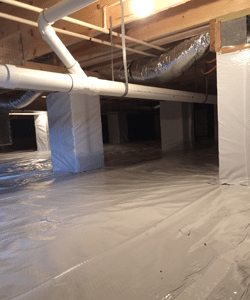
Crawl space encapsulation involves closing off vents, installing a durable vapor barrier across the ground, and insulating the foundation walls. This process, known as encapsulation, transforms a dark, damp space into a dry, conditioned part of your home, reducing the airflow that carries moisture and contaminants upward. When combined with insulation, a sealed crawl space prevents the issues that plague traditional vented designs, including mold growth, wood rot, pest intrusion, and persistent drafts.
According to the U.S. ENERGY STAR program, properly air sealing and insulating a basement or crawl space yields significant improvements in comfort, indoor air quality, and energy savings. In other words, by addressing one hidden space beneath your home, you can significantly improve the overall feel and performance of your home year-round.
1. Improved Indoor Air Quality and Health
An unsealed crawl space is a hidden source of poor indoor air quality. These areas are often damp, dark, and prone to mold growth and wood rot, especially in Maryland’s humid climate. Moisture that collects in vented crawl spaces creates an ideal environment for mold, mildew, and pests, including termites, rodents, and insects. When that air rises into your home, it carries allergens, odors, and pollutants along with it.
Encapsulating your crawl space eliminates these problems at their source. Installing vapor barriers and sealing off vents prevents moisture from accumulating, while spray foam insulation helps seal gaps and cracks that allow air and pests to enter. The result is a cleaner, drier space that no longer sends musty, contaminated air into your home.
Families with allergies or asthma often notice an immediate improvement in air quality after encapsulating their crawl space. A dry, sealed crawl space also protects your home’s structure by preventing wood rot, pest infestations, and the spread of mold, all while keeping your living area healthier and more comfortable.
2. Lower Energy Bills and Improved Efficiency
If your crawl space is cold and uninsulated, your heating system works harder than necessary to compensate. During Maryland winters, an open crawl space acts like a refrigerated cavity beneath your home, allowing heat to escape through the floor. This constant heat loss forces your furnace to run longer and harder, which increases your energy bills and reduces system efficiency.
Encapsulating your crawl space helps your home hold onto heat rather than losing it through the floor. When the crawl space becomes part of your home’s conditioned area, your HVAC system can maintain comfortable temperatures with less effort. The U.S. Department of Energy recommends insulating crawl space walls to an R-10 to R-15 value in Maryland’s climate zone for the best results.
Homeowners who insulate and seal their crawl spaces often see a noticeable drop in monthly energy bills. In the summer, these improvements prevent hot, humid air from entering the space, reducing strain on your air conditioner. The result is year-round energy savings, fewer maintenance issues, and a longer lifespan for your HVAC system.
3. A More Comfortable Home (No More Cold Floors!)
 Few things are worse on a winter morning than stepping onto an icy floor. If your first-floor rooms always feel colder than the rest of your house, your crawl space could be the cause. Without insulation, cold air collects beneath your floors, creating drafts and uneven temperatures throughout your living areas.
By sealing and insulating your crawl space, you create a barrier that keeps cold air out and conditioned air in. Encapsulated crawl spaces with insulated foundation walls maintain a more consistent temperature, resulting in floors above that stay warmer and more comfortable. Even tile or hardwood surfaces that once felt frigid will retain heat more effectively.
Beyond comfort, a sealed crawl space provides added protection against frozen pipes and moisture-related issues in the winter. It also helps stabilize indoor humidity levels year-round, so your home feels less stuffy in summer and cozier in winter.
Don’t Wait Until It’s Freezing: Seal Your Crawl Space Today
Sealing and insulating your crawl space before winter isn’t just a comfort upgrade; it’s a wise investment in your home’s health and efficiency. A properly insulated crawl space improves indoor air quality, lowers energy costs, and keeps every room above it warmer and more comfortable.
With Maryland’s winter temperatures just around the corner, now is the perfect time to make this simple, science-backed improvement. DeVere Insulation Home Performance offers expert crawl space evaluations, encapsulation, and insulation services to help protect your home from the ground up.
Call today to schedule your complimentary crawl space assessment and keep your Maryland home warm, healthy, and energy-efficient throughout the winter.
Resources:
Building Science Corporation. (n.d.). Information sheet 512: Crawlspace insulation for all climates. ENERGY STAR. https://www.energystar.gov/sites/default/files/asset/document/BSC%20Information%20Sheet%20512%20Crawlspace%20Insulation%20for%20all%20Climates.pdf
ENERGY STAR. (n.d.). Basement and crawl space. U.S. Environmental Protection Agency. https://www.energystar.gov/saveathome/seal_insulate/basement_crawlspace
ENERGY STAR. (n.d.). DIY checks and inspections: Insulation R-values. U.S. Environmental Protection Agency. https://www.energystar.gov/saveathome/seal_insulate/identify-problems-you-want-fix/diy-checks-inspections/insulation-r-values
MyPDH Engineer. (n.d.). Heat loss from crawl spaces. https://mypdh.engineer/lessons/heat-loss-from-crawl-spaces/
Talbot County, Maryland. (n.d.). Conditioned crawl space guide. Talbot County Department of Planning and Permits. https://talbotcountymd.gov/uploads/File/PlanningPermits/PI/CONDITIONED%20CRAWL%20SPACE%20GUIDE.pdf
University of Maryland Extension. (n.d.). Home energy: Insulation. https://extension.umd.edu/resource/home-energy-insulation