A row of icicles hanging from gutters after a snowfall may look like a winter wonderland, but icicles on roof edges can indicate ice dams. These ridges of ice form along the roof’s edge and keep melting snow from draining. Water collects behind the ice and can seep into ceilings, walls, and insulation. The damage may not be visible until paint starts peeling or, worse, the framing begins to decay. It doesn’t even take a major snowstorm. As little as 2 inches of snow can be enough.
The trouble often starts inside the house. Heat escaping into the attic warms the upper roof and melts the snow above it. The water runs toward the colder eaves and freezes again.
So, how to prevent ice dams? The lasting solution starts at the ceiling, not on the roof. Focus on sealing air leaks at the ceiling, insulating the attic, and properly ventilating the roof assembly.
You don’t need a winter of heavy snowfall to get ice dams in Baltimore. Temperatures that rise above freezing and then drop again can be enough when snow is on the roof. Baltimore City, Baltimore County, and Anne Arundel County all fall within IECC 2021 Climate Zone 4A, classified as mixed-humid. A home energy audit can help pinpoint where heat is escaping before the next freeze-thaw cycle.
What Causes Ice Dams on a Baltimore Roof
The temperature split that creates the dam
The key to what causes ice dams is the temperature difference across the roof. The upper section averages above 32°F, warm enough to melt snow, but the lower section stays below freezing. Meltwater runs down to that colder edge and freezes again.
The process continues as more snow melts and refreezes, building an ice ridge that blocks drainage. Water collecting behind that ridge can find its way beneath the roofing.
The roof overhang is particularly susceptible because it extends past the heated exterior walls. It doesn’t receive the same warmth from indoor heat loss as the roof above the living space. This temperature difference explains why ice dams form at the eaves.
Where the heat comes from
Much of the heat that warms the roof comes from inside the house. It moves up to the roof deck by conduction, convection, and radiation. However, in many homes, the main issue is warm air leaking through the ceiling. Even small gaps can let a surprising amount of warm indoor air escape into the attic.
Other sources can contribute. Chimneys and wood stoves give off heat, leaky attic ductwork warms the space, and knee wall areas can provide another path for indoor heat to reach the roof. Differences in winter attic heat loss help explain why ice dams on Baltimore roofs develop on some homes after a snowfall but not others.
Why the eave is the weak spot
The spot where the roof meets the exterior wall is a common place for insulation problems. Rafters sit right above the wall, so there’s little room for insulation above the top plate. Warm air can also escape through gaps around plumbing and electrical wires. If these gaps aren’t sealed, heat escapes into the attic and makes roof temperatures uneven, which can lead to ice dams.
 Skylights can cause the same problem. Snow melts around the warmer skylight, and water runs down to the colder roof below, where it can refreeze.
When checking attic insulation in Baltimore, pay as much attention to these tricky spots as you do to the main attic floor. Good insulation in the open area won’t make up for gaps along the perimeter.
Snow is insulation
The deeper the snow, the worse the ice dams can be. Each extra inch of snow adds about R-0.5 to R-1 of insulation, which holds more heat under the roof sheathing. Even if it’s freezing outside, this trapped heat can melt snow higher up. The melted water then flows down to the colder eaves.
The Three Fixes That Actually Stop Ice Dams
Order matters: seal, insulate, ventilate
To control ice dams, start by sealing gaps where warm air escapes from the living space into the attic. Insulation alone will not close these gaps. Once the ceiling is airtight, add attic insulation and ensure proper roof ventilation.
1. Air seal the ceiling plane
A finished ceiling isn’t necessarily airtight. Warm air can still leak out through openings around recessed can lights, plumbing stacks, furnace flues, and chimneys. Other places where air can escape into the attic include hatches and stairs, dropped ceilings, open soffits, and exhaust fan housings. Heat can also be lost through gaps along top plates, ceiling drywall seams, and attic knee walls.
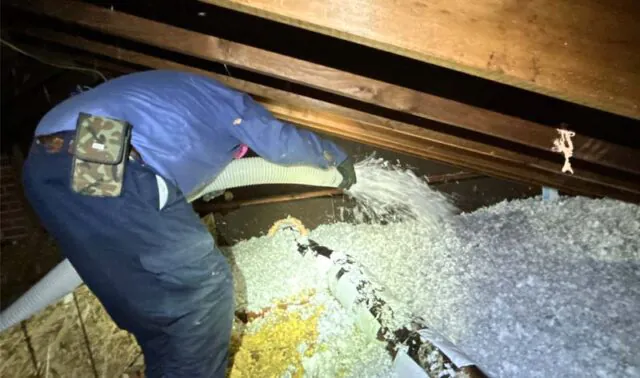
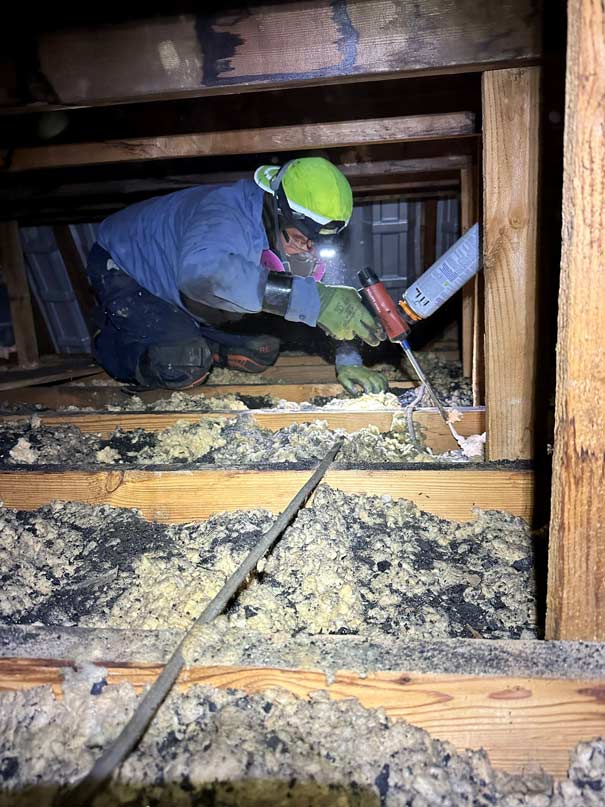
Even small gaps can let a substantial amount of heated air into the attic. Attic air sealing closes them with caulk, spray foam, and weatherstripping, keeping warm indoor air from escaping through the ceiling.
Professional air sealing services can address problem areas before new insulation makes them harder to access.
2. Insulate the attic continuously
Once you seal air leaks, insulation helps slow heat transfer toward the roof deck. In an attic insulated at the floor, the air barrier under the insulation needs to remain continuous. In most homes, that’s the ceiling drywall. The insulation above it should be consistent in depth, with no thin spots or gaps.
Pay special attention to the area above the exterior walls. Rafters leave little room for insulation above the top plate, so it can be hard to match the depth of the rest of the attic. In tight spots, high-R-per-inch foam can be a good alternative.
Another approach places closed-cell spray foam against the underside of the roof deck as part of an unvented attic assembly. The appropriate solution depends on how the attic is configured. Comparing attic insulation options helps homeowners understand the different approaches.
3. Ventilate the roof assembly
The next step is to keep the roof deck cool to limit the melting that feeds ice dams. The most effective approach is to create a continuous ventilation path from the soffit to the ridge. When soffit and ridge vents are set up correctly, outside air flows under the roof sheathing.
That airflow needs a clear path. Baffles and insulation dams keep attic insulation from blocking soffit openings, and a gap of at least 2 inches between the insulation and the underside of the roof deck gives air room to move.
More airflow isn’t automatically the answer, though. Mechanical attic ventilation isn’t recommended as an ice dam solution because it can create negative pressure inside the home. Once you reduce air leakage and conductive heat loss, relatively small amounts of roof ventilation are enough to help keep the roof deck cooler.
The side benefit
Another benefit of sealing air leaks and adding insulation is a more comfortable home year-round. Homeowners can also save approximately 15% on heating and cooling costs when the work includes sealing and insulating attics, floors above crawl spaces, and accessible basement rim joists.
What Ice Dams Do Inside the House — and What to Do Right Now
The damage you can see
Sometimes the first indication of trouble is a stain spreading across the ceiling. Other visible signs include peeling paint, displaced shingles, and gutters sagging under accumulated ice. Gutters don’t cause ice dams, although they can concentrate ice along the vulnerable roof edge.
The damage you cannot see
The more serious effects of roof ice dam damage aren’t always visible from inside the house. When water backs up behind the ice, it can find openings in the roof covering and enter the attic. From there, it may move into exterior walls or reach ceiling finishes.
Water-soaked insulation can compress and lose its insulating value, even after it dries. Moisture trapped inside wall cavities can also cause wood framing to decay and metal fasteners to corrode.
The damage doesn’t always appear while the ice dam is still there. A ceiling or wall may look fine at first, then develop peeling paint long after the snow and visible leak disappear.
Moisture and mold control
When water gets in through an ice dam, it can cause mold and mildew, even in hidden spots like behind drywall or above ceilings, where you might not notice.
Controlling mold starts with controlling moisture. Dry water-damaged areas and belongings within 24 to 48 hours to help limit mold growth.
If mold develops, cleaning it up is just one step. You also need to fix the source of the moisture, or the mold will likely return.
Professional moisture and humidity control can help address the conditions left behind by water intrusion.
Short-term actions
If an ice dam has already formed, removing snow from the roof takes away one of the ingredients it needs to keep growing.
A roof rake or push broom can remove snow, although either may damage roofing materials. In an emergency, tap water applied on a warm day can open a channel through the ice, allowing trapped water to drain. It’s a temporary measure. The channels can refreeze and become ineffective within days.
Any ice dam removal involving a winter roof carries a risk of injury, and the roofing itself can be damaged during the work. Interior repairs should wait until affected ceilings and walls are completely dry.
Why a professional diagnosis comes first
Repairing a water stain won’t resolve the heat loss that caused the ice dam. If that problem remains, the next freeze-thaw cycle can bring another leak.
A weatherization contractor can evaluate the ceiling plane using a blower door test to measure airtightness. Infrared cameras can help locate areas where excessive heat is escaping.
The team includes professionals with BPI Energy Auditor, Building Analyst, and QCI credentials. A home energy audit can help identify where corrective work is needed.
Tightening a home also requires attention to safety. Combustion and exhaust appliances need enough air to operate properly, even after air leaks are sealed.
FAQ
What exactly is an ice dam?
An ice dam is a ridge of ice along the roof edge that prevents melting snow from draining. Water collects behind it and can leak into the house.
Do icicles always mean I have an ice dam?
No. Icicles can be a warning sign, especially when water collects behind an ice ridge. That water may be drawn beneath shingles through capillary action.
How much snow does it take to form an ice dam?
As little as 2 inches can be enough if the roof is poorly sealed and insulated. Snowfall followed by several days of below-freezing temperatures can trigger the process.
Does more attic insulation alone solve ice dams?
 Not always. Insulation slows conductive heat loss through building materials, but it won’t stop warm air from leaking through ceiling openings. Seal those leaks before adding insulation.
Do heat cables fix ice dams?
Heat cables address ice, not the heat loss that creates it. Self-adhered membranes along the eaves can provide another layer of protection against leaks, but neither corrects the underlying cause.
Can an attic fan stop ice dams?
Mechanical attic fans aren’t recommended for this purpose. They can create unwanted negative pressure inside the house without correcting the heat escaping through the ceiling.
Will stopping ice dams overload my roof with snow?
Reducing snowmelt increases the snow load the roof carries. A home built to current building codes should be able to handle that additional weight without structural problems.
Are ice dams really a Baltimore problem?
Yes, and it doesn’t take an especially harsh winter. Baltimore City, Baltimore County, and Anne Arundel County are all in IECC 2021 Climate Zone 4A, classified as mixed-humid. Snow on the roof, followed by temperatures that dip below freezing again, can be enough to cause trouble.
Address the Heat Loss Before the Next Freeze
An ice dam along the roof’s edge often means heat is escaping from the house. The long-term fix starts with sealing ceiling air leaks, adding insulation, and ensuring the roof is properly ventilated.
These improvements can also make the house more comfortable in the winter and reduce heating and cooling costs year-round.
Before another freeze-thaw cycle, schedule a professional attic evaluation with DeVere Insulation Home Performance. Call (443) 770-1111 or request a free estimate to get started.
References
“A Brief Guide to Mold, Moisture and Your Home.” United States Environmental Protection Agency, 18 Feb. 2026, www.epa.gov/mold/brief-guide-mold-moisture-and-your-home.
Antonopoulos, Chrissi, et al. Guide to Determining Climate Zones by County: Building America and IECC 2021 Updates. PNNL-33270, Pacific Northwest National Laboratory, Sept. 2022, www.pnnl.gov/main/publications/external/technical_reports/PNNL-33270.pdf.
“Attic Air Sealing, Insulating, and Ventilating for Ice Dam Prevention.” Building America Solution Center, Pacific Northwest National Laboratory, 30 Sept. 2021, basc.pnnl.gov/information/attic-air-sealing-insulating-and-ventilating-ice-dam-prevention.
Fisette, Paul. “Preventing Ice Dams.” Building and Construction Technology, University of Massachusetts Amherst, 2011, www.umass.edu/bct/publications/articles/preventing-ice-dams/
Huelman, Patrick, et al. “Dealing with and Preventing Ice Dams.” University of Minnesota Extension, 2022, extension.umn.edu/protecting-home-rain-and-ice/dealing-and-preventing-ice-dams.
“Methodology for Estimated Energy Savings.” ENERGY STAR, United States Environmental Protection Agency, www.energystar.gov/saveathome/seal_insulate/methodology.