Maryland winters bring a bit of everything – snow and ice, freezing rain, and bone-chilling wind. Whether you live in the mountains of Garrett County or along the Chesapeake Bay, winter can hit hard. With heating costs always in flux, preparing your home isn’t just smart, it’s necessary. These practical, educational steps below will not only help protect your home from Maryland winter damage but also help you use less energy too.
Seal Air Leaks Around A House
 One of the most cost-effective ways to save energy this winter is to stop it from leaking from your home. Properly sealing your home’s air leaks and adding insulation can cut your heating costs by up to 15%.
The key areas to check:
- Around doors and windows: weather strip and caulk gaps as needed.
- Exterior siding and foundation gaps.
- Openings around pipes, wires, and vents.
- Attic and basement trouble spots: gaps around recessed lights, chimneys, attic hatches, plumbing stacks, and basement rim joists.
Pro tip: Use an incense stick or candle on a windy day to detect drafts.
Check and Upgrade Your Attic Insulation
Heat rises, and without enough attic insulation, warm air escapes straight through your roof. If you can see your ceiling joists, you likely need more insulation.
You should aim for a minimum of R-49 to R-60 in attic insulation for your Maryland home. That’s around 15-18 inches of fiberglass batts or 13-15 inches of blown-in cellulose insulation.
Before adding insulation:
- Seal any attic air leaks.
- Install baffles at the eaves to avoid blocking your attic’s ventilation.
- Ensure your attic has proper ventilation to prevent moisture build-up.
Seal and Insulate Your Crawl Space
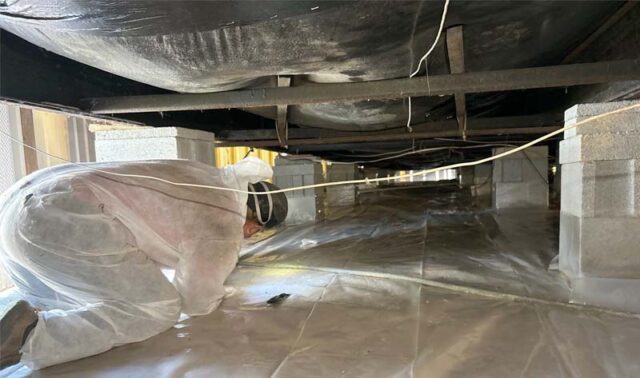 Traditional vented crawl spaces often let in damp air. This creates a breeding ground for mold, mildew, and pests, especially in our state’s damp climate.
Instead, encapsulate and condition your crawl space by:
- Sealing all exterior vents and gaps.
- Installing a heavy ground moisture barrier.
- Insulating the crawl space walls (the recommended amount is R-13 for most of Maryland).
Creating an unvented, conditioned crawl space improves comfort (goodbye cold floors!), saves energy, and improves indoor air quality. It also helps prevent issues that could lead to costly repairs like water intrusion or mold.
Protect Your Pipes to Prevent Freezing
When water freezes, it expands, and frozen pipes can freeze and burst, causing serious water damage. Maryland’s Office of People’s Counsel recommends insulating your water lines along exterior walls and through unheated spaces to keep your pipes from freezing.
To avoid disaster:
- Insulate your pipes in your crawl space, basement, garage, and along exterior walls.
- Pay extra attention to outdoor faucets and pipes near basement windows.
- Disconnect and drain your garden hoses and cover exterior faucets.
- Know where your shut-off valve is in case of an emergency.
During extreme cold weather, open the cabinet doors under your sinks on exterior walls and let your faucets drip slowly. This helps prevent the pipes from freezing. It’s also a good idea to winterize your irrigation system and exterior sprinkler lines, too.
Tune Up Your Heating System (and Check Detectors)
Schedule a fall heating tune-up to ensure your system is ready for winter. A pro will check burners, thermostats, safeties, and vents. If you use a fireplace, get your roof inspected by a qualified chimney sweep and have the chimney cleaned to avoid blockages or fire hazards.
DIY tasks:
- Replace your furnace air filters every 1–3 months.
- Test carbon monoxide and smoke detectors (replace any over 10 years old)
A safe, efficient heating system will help keep your home safe and cozy all winter.
Upgrade Your Lighting and Electronics for Efficiency
 Lighting uses about 15% of the average home’s electricity. Switching to LED bulbs can save you around $225 per year.
Easy upgrades:
- Swap bulbs in your most-used areas, such as the kitchen, porch, and living room.
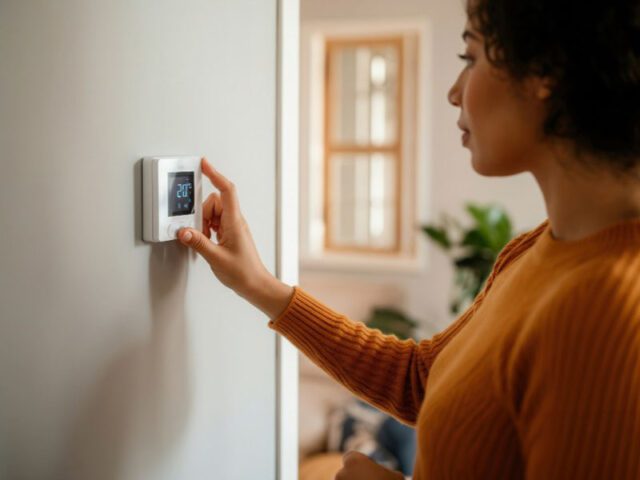
- Install a programmable or smart thermostat for automatic temperature control.
- Unplug unused electronics and chargers (a.k.a. energy vampires).
These upgrades pay off quickly and make your home more efficient year-round.
Other Quick Winter Prep Tips
- Clean your gutters and downspouts before the first snowfall
- Avoid backups that can lead to ice dams and water seepage.
- Ensure your downspouts direct water away from your home’s foundation.
- Maryland’s fall leaves contribute significantly to water clogs
- Protect outdoor items
- Store or cover outdoor gear like patio furniture, grills, or lawn equipment.
- Drain gas-powered tools and irrigation lines.
- Blow out/drain garden hoses and sprinkler systems.
- Stock up on winter supplies
- Gather snow shovels and ice-melting salt (pet-safe if needed).
- Put together an emergency kit with flashlights, batteries, shelf-stable food, and water.
- Keep a battery-powered radio or charger ready for winter storms and outages.
Call DeVere Home Performance Before Winter Hits
There’s no better time than now to prep for winter. Whether you need air sealing, attic insulation, or help to insulate your pipes and crawl space, DeVere Home Performance has you covered.
We specialize in preparing homes across Maryland for every kind of weather. Our expert team uses building science, quality materials, and expert care to help you save energy, prevent damage, and stay warm.
Contact us today to schedule your winter prep consultation. We’ll help you make your home safe, efficient, and comfortable before the snow starts falling.
____________________________________________________________________________________
References
dhcd.maryland.gov. (2020). MF rehabilitation standards 2020. Maryland Department of Housing and Community Development. https://dhcd.maryland.gov/Documents/Consolidated%20Plan/MFRehabilitationStandards2020.pdf#:~:text=Attic%20areas%20and%20crawl%20space,pump
Energy.gov. (n.d.). Lighting choices to save you money: ENERGY STAR savings. U.S. Department of Energy. https://www.energy.gov/energysaver/lighting-choices-save-you-money#
ENERGYSTAR.gov. (n.d.). Seal and insulate with ENERGY STAR: Methodology. U.S. Environmental Protection Agency. https://www.energystar.gov/saveathome/seal_insulate/methodology#:~:text=Cost,Savings%20Estimates
Extension.umd.edu. (n.d.). Home energy insulation. University of Maryland Extension. https://extension.umd.edu/resource/home-energy-insulation/
Maryland Department of Emergency Management. (n.d.). Winter storms. https://mdem.maryland.gov/pages/winter-storms.aspx#
National Weather Service. (n.d.). Winter weather preparedness. NOAA. https://www.weather.gov/wrn/winter-at-home-sm#:~:text=Image%3A%20Winterize%20your%20home,Gather%20supplies
Office of People’s Counsel of Maryland. (n.d.). Winter weather. https://opc.maryland.gov/Consumer-Learning/Storm-Preparedness/Winter-Weather#
Reuters. (2023, October 11). US home heating bills seen flat to lower this winter – EIA. https://www.reuters.com/business/energy/us-home-heating-bills-seen-flat-lower-this-winter-eia-2023-10-11/#:~:text=The%2060,from%20last%20winter%2C%20EIA%20projected
Talbot County Maryland. (n.d.). Conditioned crawl space guide: Performance benefits. https://talbotcountymd.gov/uploads/File/PlanningPermits/PI/CONDITIONED%20CRAWL%20SPACE%20GUIDE.pdf#:~:text=space%20surface%20temperature%20is%20permitted,space%20temperatures%2C%20dew%20points%20and